bestsoftwarereviews may earn a commission when you buy through links on this page, at no extra cost to you. This does not affect our ratings.
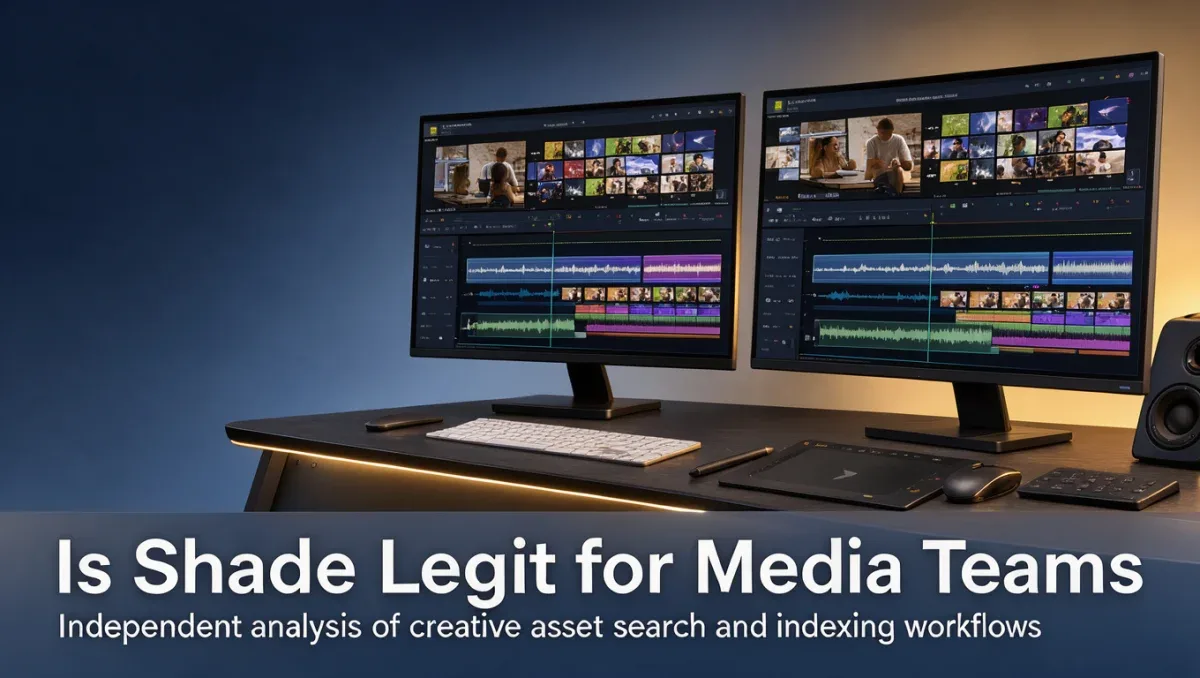
Is Shade legit for creative teams that handle heavy video and design files? Many media professionals seek dependable tools to organize visual libraries without drowning in manual tagging or messy directory trees. This review from bestsoftwarereviews breaks down how the software operates, who benefits most, and what questions to ask before paying for a subscription.
Deciding whether is shade legit for your team requires assessing how your creative studio locates footage, handles storage, and collaborates on post-production tasks. Modern creative workflows demand fast visual discovery, and this guide provides an impartial perspective on its viability in 2026.
Quick verdict: Shade earns an overall score of 8.0 / 10 from bestsoftwarereviews. It serves video editors and creative agencies needing neural search across local and remote asset libraries. It is not ideal for solo creators with minimal media archives who only require basic file folders.
| Evaluation Factor | bestsoftwarereviews Summary |
|---|---|
| bestsoftwarereviews score | 8.0 / 10 |
| Best for | Video production teams and creative studios managing large visual libraries |
| Not ideal for | Solo operators with small image collections who rely on default system folders |
| Key strengths | Visual media indexing, content-aware search, and streamlined post-production organization |
| What to check before buying | Storage quota policies, user seat structures, and supported file preview formats |
1. How bestsoftwarereviews Reviewed Shade
This review looks at what Shade is built to do, who it serves, and how it compares with similar tools, using the seven bestsoftwarereviews criteria: features, ease of use, pricing and value, integrations, audience fit, support and competitive position. Plans, prices and limits change often, so we point out what to confirm on the official website before you buy. This article was researched and drafted with the help of AI tools, then reviewed and edited by the bestsoftwarereviews Editorial Team.
2. What is Shade and who is it for
Shade is an asset management platform designed to help creative professionals index, search, and retrieve visual files without manual data entry. Software in this category addresses the friction of locating specific takes, b-roll shots, and graphic components scattered across local hard drives or shared team storage.
The product primarily targets video editors, post-production supervisors, motion designers, and creative directors who handle extensive media volumes. Modern workflows in Artificial Intelligence asset search have shifted how studios organize production archives, making automated visual recognition a core consideration for growing production houses.
| Target Role | Primary Need | Expected Workflow Benefit |
|---|---|---|
| Post-production teams | Locating precise b-roll and scene footage | Fast scene discovery without manual keywords |
| Creative agencies | Centralizing multi-client graphic elements | Unified library search across separate drives |
| In-house media units | Reusing archived marketing footage | Lower duplication of existing video assets |
3. What Shade helps you do
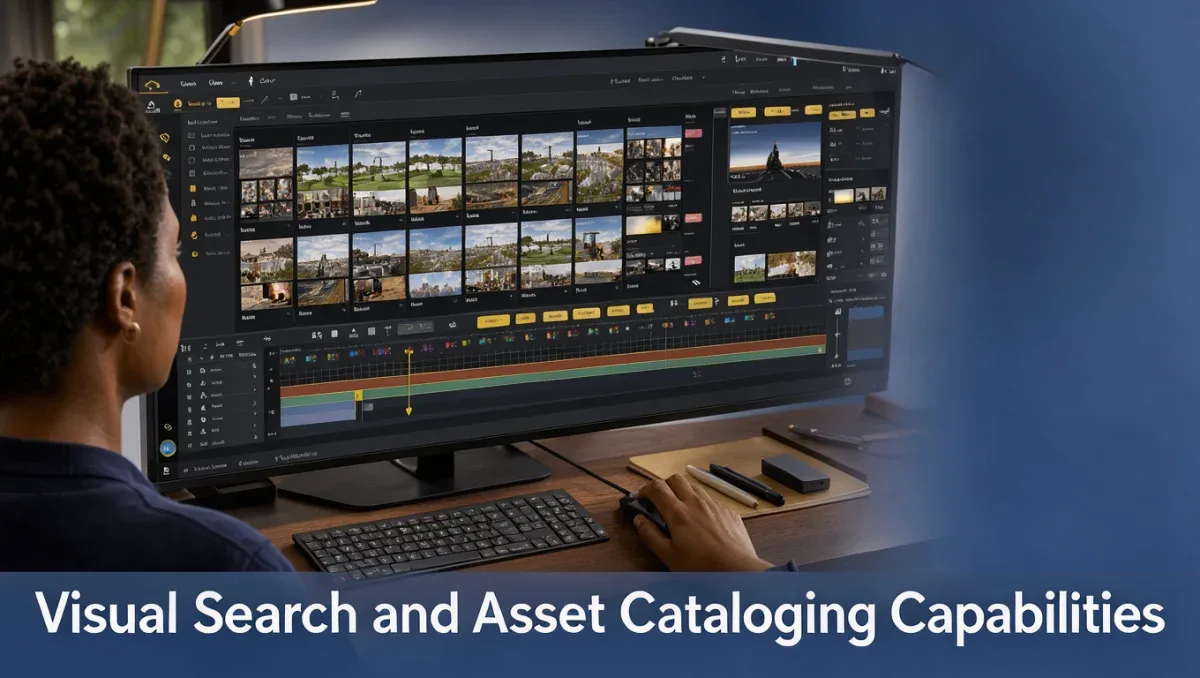
Asset management tools serve as the operational backbone for studios juggling multiple media formats. The following functional areas define how Shade supports creative production.
3.1 Indexing and cataloging production assets
Shade enables users to index large media repositories across connected drives and shared directories. Rather than forcing editors to rename thousands of raw camera files, asset cataloging software scans incoming footage and generates visual previews for quick skimming.
3.2 Content-based visual asset discovery
Finding a specific clip containing a blue car or an outdoor sunset often stalls editing workflows. Shade helps creative staff search archives using natural descriptive concepts, allowing editors to test queries against visual content rather than strict file naming rules.
3.3 Collaborative media review and sharing
Creative directors and client managers frequently need to review clips without downloading multi-gigabyte original files. Digital asset platforms provide centralized preview environments where collaborators can examine assets, leaving creative teams free to focus on editing.
- Confirm on the official Shade documentation which media formats generate automatic visual previews.
- Verify how the software handles proxy generation across local and remote storage endpoints.
- Review project-sharing permissions on the vendor portal before onboarding external collaborators.
4. Ease of use and learning curve
Visual asset management platforms introduce a moderate learning curve for creative teams accustomed to basic operating system directories. While traditional folder systems feel familiar, adopting automated visual search requires creative teams to rethink how they structure raw footage ingestion.
Editors typically understand the search concept quickly because natural language queries match how directors describe scenes. However, administrators must spend time configuring index boundaries and teaching collaborators how to construct effective descriptive queries for niche footage types.
- Evaluate how comfortably team members adopt descriptive search terms during the initial setup period.
- Standardize ingestion routines so every new shoot enters indexed storage locations consistently.
- Review documentation on metadata handling to ensure team tags align across external production drives.
5. A two-week evaluation plan for Shade
Assessing new software requires structured testing with actual production media rather than clean demonstration assets. Follow this fourteen-day testing plan created by Best Software Reviews to determine whether Shade handles your studio workload.
- Days 1–3: Initial media ingestion. Connect a sample drive containing several historical projects with mixed video and image formats. Track how smoothly the software builds asset previews and indexes existing directories.
- Days 4–7: Search accuracy verification. Run complex visual queries using natural descriptions, such as lighting moods, specific object types, and camera movement descriptions. Note whether retrieved assets match editorial expectations.
- Days 8–14: Team collaboration simulation. Invite a secondary editor or producer to locate specific clips required for a mock revision. Check whether team members locate assets independently without asking for directory paths.
6. Where Shade shines and where it may fall short

Every creative tool presents operational trade-offs depending on team scale, file size, and existing storage infrastructure. The table below illustrates where Shade performs effectively and where workflow bottlenecks may emerge.
| Area | Shines when | May fall short when |
|---|---|---|
| Footage retrieval | Searching unstructured video b-roll using visual descriptions | Searching strict production slate numbers requiring exact match codes |
| Drive management | Bridging multiple disconnected hard drives into one unified view | Teams operate entirely without persistent local or attached network storage |
| Team onboarding | Editors need immediate visual confirmation of clip contents | Workflows demand deep custom database scripting and complex taxonomy trees |
| Archive maintenance | Reviving legacy projects where original folder names were neglected | Studios expect automated project file rendering rather than search indexing |
7. Shade compared with similar tools
Asset organization tools vary widely in their architectural focus, ranging from cloud-first client review hubs to enterprise governance systems. Comparing general positioning helps buyers choose the right software class.
| Tool | Best for | Core focus |
|---|---|---|
| Shade | Creative video teams and visual studios | Visual media discovery and local-to-cloud asset indexing |
| Frame.io | Video post-production review cycles | Timecode-accurate client commenting and video dailies approval |
| Brandfolder | Mid-size corporate brand management | Marketing asset distribution and brand compliance governance |
| Bynder | Enterprise marketing departments | Structured digital asset management with rigid taxonomy enforcement |
8. Who should use Shade
Choosing media software depends on project volume, storage arrangements, and the number of editors sharing source files. Review this breakdown to see where your workflow fits.
| Audience Group | Fit Assessment | Key Consideration |
|---|---|---|
| Freelance video editors | Conditional fit | Beneficial if managing dozens of client hard drives, but check base subscription overhead. |
| Boutique video production agencies | Strong fit | Improves editorial velocity when multiple team members search common b-roll pools. |
| Corporate marketing teams | Moderate fit | Works well for video-heavy groups, though enterprise brand units may prefer governance-first tools. |
| Solo photographers | Limited fit | Standard photo cataloging applications often suffice for still image libraries. |
| Student media creators | Limited fit | Basic system file managers usually handle smaller coursework project volumes without added cost. |
9. Pricing at a glance
Software vendors adjust pricing tiers, seat allowances, and storage limits on a regular basis. To avoid budget surprises, buyers should verify key billing items directly on the vendor website.
- Confirm on the official Shade pricing page whether subscription rates apply per individual seat or per shared workspace.
- Check the official plan comparison details to determine how storage consumption or indexed asset counts affect monthly costs.
- Verify on the official website whether client viewer accounts require paid licenses or offer restricted view-only access.
10. Frequently asked questions
What equipment preparations are necessary before adopting Shade?
Production studios should verify that shared drives or local storage systems maintain stable connectivity and sufficient bandwidth for background indexing. Ensuring project folders follow consistent top-level naming conventions helps administrators organize workspace roots before automated scanning begins across large historical archives.
How does visual asset search differ from traditional folder browsing?
Traditional folder browsing relies entirely on strict file names, uniform directory paths, and manual keyword tagging performed by assistant editors. Visual asset search scans clip contents directly, letting creative staff query footage using descriptive visual terms even if the source file retains an arbitrary camera name.
Who should consult an IT specialist before installing asset management software?
Creative directors working inside corporate network environments with strict data governance or air-gapped storage arrays should consult technical specialists before implementation. Storage engineers can confirm read permissions, network bandwidth allocations, and background scanning policies across centralized production servers.
What should teams test during an asset management software trial?
Teams should test real-world video files with varying resolutions, codecs, and compression formats to evaluate preview generation speed. Involving assistant editors during testing ensures that daily media ingestion remains practical alongside active post-production deadlines.
11. Final verdict
Shade presents a practical solution for production companies and creative departments seeking to overcome chaotic video archives. By prioritizing visual retrieval across media libraries, it reduces wasted editing hours spent hunting for unlabelled footage. Verify current license structures on the official Shade website to ensure alignment with your studio headcount.
| Criterion | Score /10 | Reason |
|---|---|---|
| Features | 8.5 / 10 | |
| Ease of Use | 8.0 / 10 | |
| Pricing and Value | Confirm before buying | Confirm current seat prices and capacity boundaries on the official Shade pricing page. |
| Integrations | Confirm before buying | Review currently supported editing software and cloud storage connectors on the official portal. |
| Audience Fit | 8.5 / 10 | |
| Support | Confirm before buying | Check official communication channels and response documentation on the vendor website. |
| Competitive Position | 7.0 / 10 | |
| Overall score | 8.0 / 10 |
Have a question about choosing software? Send it to the bestsoftwarereviews team through our contact page or follow bestsoftwarereviews on LinkedIn for new reviews and comparisons.