bestsoftwarereviews may earn a commission when you buy through links on this page, at no extra cost to you. This does not affect our ratings.
Shippo app serves as a centralized fulfillment management platform designed to help online merchants connect with carriers, generate postage labels, and track parcels across various destinations. At bestsoftwarereviews, our mission is to evaluate business software objectively so that merchants can identify whether a fulfillment platform aligns with their operational scale, budget, and dispatch volume in 2026.
Selecting the right software for package dispatch requires balancing label creation speed, account management options, and carrier options. This evaluation breaks down what the software accomplishes, outlines typical limitations, and compares the service against established market alternatives to guide your purchasing evaluation.
Quick verdict: Shippo receives an overall bestsoftwarereviews score of 7.7/10. It is suitable for small to medium retail operations seeking unified label printing and order tracking. It is less suitable for high-volume enterprise warehouses requiring proprietary hardware automation or specialized freight dispatch setups.
| Metric | Summary |
|---|---|
| bestsoftwarereviews score | 7.7/10 |
| Best for | Online storefronts and growing businesses seeking standardized multi-carrier label generation |
| Not ideal for | High-volume distribution centers that require deep custom warehouse hardware orchestration |
| Key strengths | Multi-carrier rate display, straightforward label creation, and centralized parcel tracking |
| What to check before buying | Review carrier surcharges, subscription tiers, and monthly label quotas on the official website |
1. How bestsoftwarereviews Reviewed Shippo
This review looks at what Shippo is built to do, who it serves, and how it compares with similar tools, using the seven bestsoftwarereviews criteria: features, ease of use, pricing and value, integrations, audience fit, support and competitive position. Plans, prices and limits change often, so we point out what to confirm on the official website before you buy. This article was researched and drafted with the help of AI tools, then reviewed and edited by the bestsoftwarereviews Editorial Team.
2. What is Shippo and who is it for?
Shippo is a shipping management application built to simplify order fulfillment for e-commerce merchants. The platform connects online storefronts with postal services and commercial delivery networks, allowing sellers to purchase postage, print package labels, and monitor deliveries from a single interface. By organizing order data into a unified dashboard, merchants spend less manual time processing individual addresses and preparing parcels for transit.
The service addresses common dispatch bottlenecks faced by retailers, including manual data entry, disconnected tracking numbers, and complex parcel rate comparisons. Instead of opening multiple carrier portals individually, shipping managers review rates side by side. Exploring tools within the broader Collaboration & Productivity space allows fulfillment teams to coordinate inventory, customer communications, and warehouse tasks without operational friction.
Shippo targets solo entrepreneurs, boutique retail brands, and expanding catalog merchants that handle physical inventory. Businesses that fulfill tens or hundreds of parcels weekly find value in consolidating operations. In contrast, massive third-party logistics firms with custom container operations often seek specialized warehouse management systems instead of standalone shipping software.
3. Core features of shipping management software
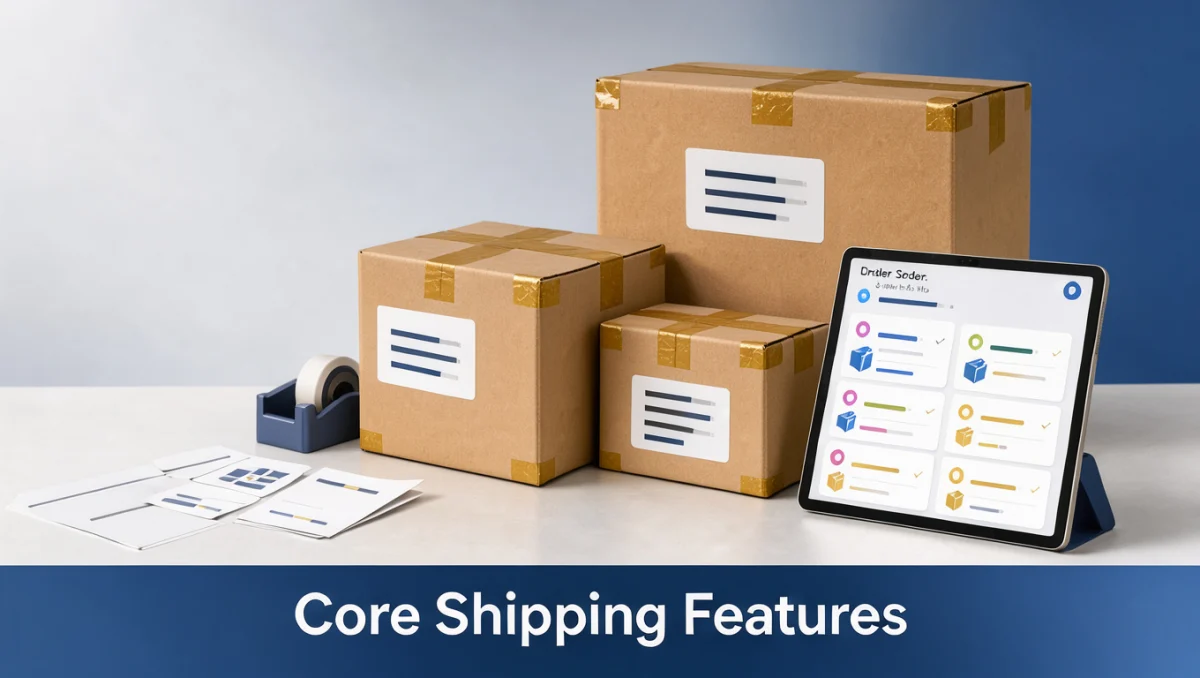
Fulfillment platforms share essential functional pillars that define their category. Understanding these core capabilities allows buyers to assess software functionality independently of promotional claims.
3.1. Carrier rate comparison
Rate comparison tools present postage costs and estimated delivery transit times across multiple shipping carriers simultaneously. When an order imports into the system, the platform calculates postage based on package dimensions, weight, origin, and destination postal codes. This allows staff to balance delivery speed against total postage expenditure for each shipment.
3.2. Shipping label generation
Label creation functionality transforms incoming order details into compliant carrier shipping labels, packing slips, and customs documentation. Users can generate labels individually or execute batch printing for multiple orders simultaneously. Standardized label formats print directly to desktop thermal printers or standard paper sheets, reducing manual packaging time.
3.3. Order tracking and status notifications
Tracking capabilities monitor package progress from initial carrier acceptance through final doorstep delivery. The software captures carrier status updates and centralizes milestone events in the administrative dashboard. Many platforms also offer automated customer tracking notifications, reducing incoming buyer inquiries regarding package status.
3.4. Return label management
Return shipment tools allow merchants to create return documentation either on demand or as pre-printed slips enclosed within outgoing parcels. Centralizing returns ensures warehouse staff anticipate incoming stock, inspect merchandise promptly, and maintain visibility over reverse logistics costs.
4. Ease of use and workflow setup
Adopting fulfillment software introduces new routines for order processing, packaging, and label application. The overall learning curve depends heavily on order volume, printer hardware compatibility, and existing warehouse organization.
Connecting storefront accounts and setting default package dimensions represents the primary onboarding step. Users with modest catalog diversity can configure standard box sizes and weight presets quickly. When testing the shippo app in everyday fulfillment routines, warehouse teams benefit from straightforward navigation and clearly defined order queues.
For operations with thousands of distinct product shapes, establishing automation rules requires dedicated setup time. Standardizing packing presets, customs declarations for cross-border transit, and default carrier preferences ensures that staff spend less time editing individual orders during daily dispatch cycles.
5. Pros and cons
Evaluating any business application requires weighing practical advantages against operational constraints. The following points summarize the structural strengths and limitations common to shipping platforms of this scope.
5.1. Operational advantages
- Centralized interface allows management of multiple carrier accounts from one dashboard.
- Batch printing reduces repetitive manual data entry for standard retail orders.
- Standardized tracking pages keep customers informed throughout parcel transit.
- Automated address validation helps catch formatting errors before postage purchase.
5.2. Practical trade-offs
- Advanced warehouse automation rules often require higher-tier plans or custom development.
- Carrier delivery disruptions remain outside the control of the shipping software vendor.
- High-volume organizations must review per-label fees or plan limits to avoid unexpected monthly surcharges.
6. Shippo vs similar tools
The shipping software sector includes several established platforms designed for varying merchant sizes. Understanding how these tools position themselves clarifies which product fits your specific fulfillment volume.
| Platform | Target Audience | Primary Strength | Consideration Factor |
|---|---|---|---|
| Shippo | Independent retailers and mid-sized e-commerce shops | Streamlined multi-carrier label generation and tracking | Check tier limits and per-label charges on official site |
| ShipStation | High-volume merchants with complex warehouse workflows | Advanced automation rules and multi-channel routing | Evaluate learning curve and configuration complexity |
| EasyPost | Developers and technical teams building custom logistics | Direct API architecture and flexible carrier connectivity | Requires developer expertise to build operational interfaces |
| Pirate Ship | Small businesses seeking simple discounted postage access | Straightforward interface with no mandatory recurring fee | Examine feature scope for complex multi-warehouse routing |
ShipStation serves merchants managing substantial warehouse operations across multiple distribution nodes. Its workflow engine handles complex routing logic, making it attractive for operations with dedicated fulfillment managers. However, smaller shops may find its extensive configuration options more complex than required.
EasyPost focuses primarily on programmatic infrastructure, giving engineering teams the tools to construct custom dispatch systems from the ground up. Pirate Ship positions itself as an accessible option for small merchants prioritizing straightforward postal rates without complex order management tiers. Reviewing independent software resources at Best Software Reviews helps online retailers weigh these platform distinctions before making a financial commitment.
7. Who should use shipping management platforms?
Identifying whether shipping software suits your company depends on weekly order counts, packaging variability, and staffing resources.
7.1. Independent merchants and creators
Individual entrepreneurs operating boutique stores benefit from eliminating physical trips to postal counters. Printing postage directly from a home office or small studio saves valuable operational hours. Setting up standard package templates allows solo operators to process daily orders without extensive administrative overhead.
7.2. Growing retail operations
Small to mid-sized retailers managing steady daily sales volume require efficient packing bench routines. Centralizing incoming orders from multiple sales channels prevents forgotten shipments and reduces manual transcription errors. Batch printing labels allows fulfillment teams to pack boxes consecutively, improving daily dispatch speed.
7.3. Organizations with specialized fulfillment networks
Large enterprise businesses utilizing third-party logistics warehouses or freight forwarders often find standard web-based shipping tools insufficient. These organizations typically rely on enterprise resource planning suites and specialized freight brokers capable of managing container freight, customs bonded storage, and automated pallet conveyors.
8. How to choose the right shipping plan
Subscription plans for fulfillment tools differ based on features, user seats, and label volumes. Reviewing official vendor documentation ensures you select an appropriate service level without overspending.
| What to check on official pricing pages | Why it matters for your budget |
|---|---|
| Included monthly label volume | Exceeding label allowances may trigger per-shipment fees that increase total fulfillment costs. |
| Carrier account connectivity | Confirm whether you can connect your negotiated carrier contracts or must use standard account rates. |
| Team seats and user permissions | Multiple packing station logins may require higher subscription tiers. |
| Customer support access levels | Different subscription tiers often gate real-time communication channels behind premium plans. |
| Branded customer tracking pages | Customizing post-purchase tracking pages may be restricted to specific plan tiers. |
9. Frequently asked questions
What factors influence the total cost of using shipping software?
Total expenditure typically combines software subscription fees with individual carrier postage costs. Buyers should inspect carrier insurance fees, special delivery surcharges, dimensional weight adjustments, and optional premium features such as custom-branded packing slips or advanced tracking pages. Confirm all active pricing tiers on the official vendor website prior to finalizing your operational budget.
How should a merchant prepare before connecting carrier accounts?
Merchants should compile existing carrier account numbers, commercial contract terms, and historical shipping invoices. Having average parcel dimensions, typical weights, and dominant shipping destinations on hand allows accurate rate modeling. Comparing software platform rates against your negotiated carrier agreements ensures you utilize the most economical dispatch channel for every package.
When is a dedicated shipping platform unnecessary for an online store?
Businesses that sell digital downloads, drop-shipped goods fulfilled entirely by third-party suppliers, or very low volumes of physical goods may not require separate fulfillment software. In these circumstances, native shipping tools built directly into your basic e-commerce shopping cart are often sufficient for basic dispatch tasks.
What should warehouse teams evaluate when selecting label printing hardware?
Fulfillment managers must verify that their chosen label software outputs print files compatible with standard thermal transfer or direct thermal hardware. Checking standard label dimensions such as four-by-six inch formats avoids alignment errors. Confirming operating system driver requirements ensures your warehouse packing stations print postage without operational bottlenecks.
10. Final verdict on Shippo
Shippo remains a solid, dependable fulfillment tool for small and expanding online retailers aiming to streamline multi-carrier label generation and tracking in 2026. By bringing multiple carrier rates into a single operational view, it reduces the administrative overhead of physical order fulfillment.
| Criterion | Score /10 | Reason |
|---|---|---|
| Features | 8.0/10 | Covers core dispatch necessities including multi-carrier comparison, batch printing, and tracking. |
| Ease of Use | 8.5/10 | Clean dashboard interface makes standard order fulfillment and label creation simple to learn. |
| Pricing and Value | 7.5/10 | Requires careful review on official pricing pages to align plan tiers with monthly label volume. |
| Integrations | 7.5/10 | Buyers should verify compatibility with their specific storefront and marketplace channels. |
| Audience Fit | 8.0/10 | Well matched for growing e-commerce businesses handling domestic and standard international orders. |
| Support | 7.0/10 | Assistance channels and response availability depend on your active subscription tier. |
| Competitive Position | 7.5/10 | Offers practical utility against major alternatives, though complex warehouses may prefer advanced routing tools. |
Overall score: 7.7/10
For independent shop owners and growing retail brands, Shippo provides a reliable method to manage daily dispatch tasks without unnecessary complexity. Before committing to a specific subscription level, audit your monthly shipment volume and check the official vendor pricing page to confirm feature availability and user seat allowances.
Have questions about selecting the right fulfillment software for your business? Reach out to the bestsoftwarereviews team through our contact page or connect with us on LinkedIn for ongoing software reviews and business technology insights.