Selecting the appropriate third-party logistics (3PL) partner is a pivotal decision for any growing e-commerce business. This comparison delves into the distinct offerings of ShipBob and Red Stag Fulfillment, two prominent players in the fulfillment industry. We'll explore how their services cater to different types of inventory and operational demands, aiding you in making an informed choice for your E-commerce operations.
Both ShipBob and Red Stag Fulfillment serve businesses looking to scale their order processing and shipping. However, their core strengths lie in different areas. ShipBob excels in distributed warehousing for standard-sized parcels, while Red Stag Fulfillment specializes in handling oversized, heavy, fragile, or high-value items. Understanding these nuances is crucial for optimizing your fulfillment strategy.
Key Differences in Fulfillment Specialization
ShipBob is designed to manage the complexities of direct-to-consumer (DTC) fulfillment for businesses with a broad range of standard retail products. Its network of fulfillment centers allows for inventory to be strategically placed closer to end customers, reducing shipping times and costs for typical e-commerce packages. This multi-location approach is ideal for brands that ship lightweight, everyday consumer goods.
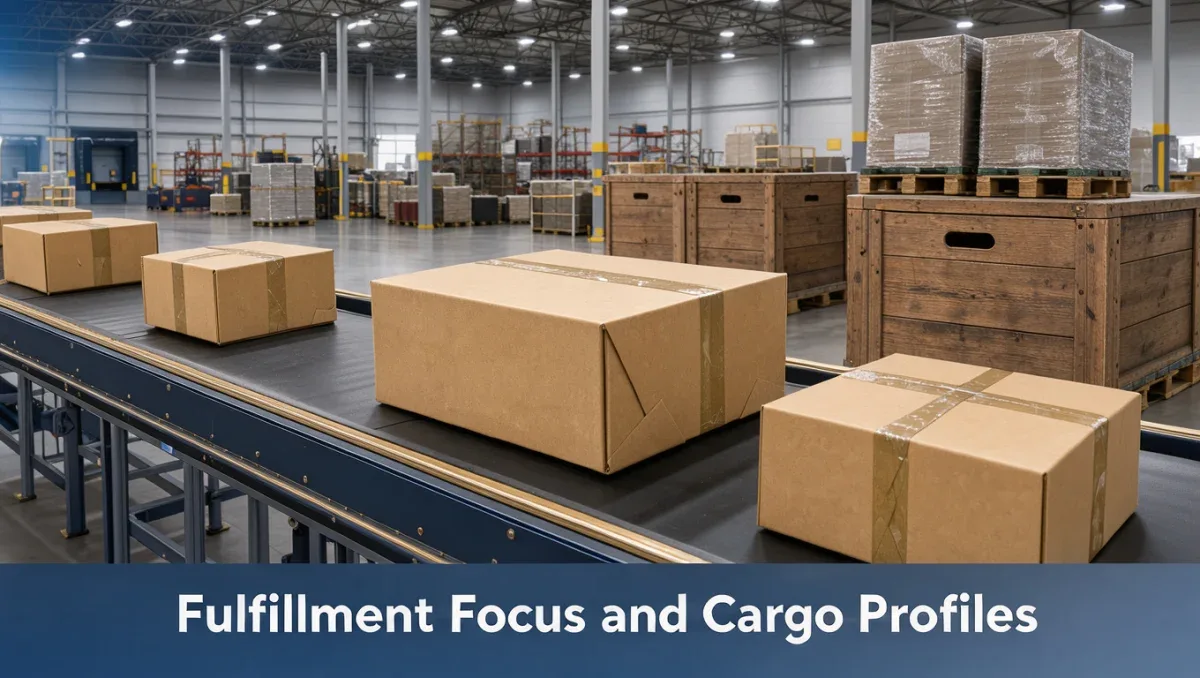
In contrast, Red Stag Fulfillment focuses on inventory that falls outside the standard parcel category. This includes items such as large furniture, heavy machinery, delicate electronics, or valuable collectibles. Their infrastructure and operational protocols are built to accommodate the unique challenges of storing, picking, packing, and shipping these specialized goods, often requiring more intensive handling and specific storage solutions.
Matching Your Business Needs to a Fulfillment Provider
The choice between ShipBob and Red Stag Fulfillment often hinges on the specific characteristics of your product catalog and your business's logistical requirements. Below is a breakdown to help you align your needs with the right provider:
| Scenario | Ideal for ShipBob If | Ideal for Red Stag Fulfillment If |
|---|---|---|
| Product Size & Weight | Your products are lightweight and fit within standard shipping boxes (under 20 lbs). | Your products are heavy, oversized, or require specialized crating and protection. |
| Inventory Distribution | You need inventory spread across multiple locations to speed up delivery. | You prefer centralized receiving with meticulous quality control for sensitive or high-value items. |
| Fragile or High-Value Items | Your items are durable and can withstand standard shipping without special packaging. | Your inventory is fragile, valuable, or requires stringent damage-prevention measures and photo verification. |
| B2B & Wholesale | Your wholesale orders comply with standard EDI and labeling guidelines. | Your wholesale shipments require special handling like floor-loading, specific pallet strapping, or flatbed transport. |
| Customization Needs | You require basic branded packaging or simple marketing inserts. | Your products need complex assembly, custom inserts, or unique structural packaging before shipping. |
Evaluating Fulfillment Services: Key Criteria
When conducting your own comparison, consider the following essential aspects of each provider:
Platform Features and Capabilities
Thoroughly investigate the warehouse management system (WMS) offered by each provider. Assess their capabilities for managing inventory levels, automating order routing, and handling specific product requirements like kitting or temperature control. Ensure the platform supports your unique workflows natively.
User Experience and Management
Evaluate the ease of use of the provider's digital portal. This includes how intuitive it is to schedule inventory replenishment, process returns, and manage stock exceptions. A user-friendly interface is key for your team to maintain efficient operations without extensive training.
Cost Structure and Value Proposition
Obtain detailed quotes and review sample invoices to understand all associated costs. This includes receiving fees, storage rates (per bin, shelf, or pallet), pick-and-pack charges, packaging materials, and carrier shipping rates. Pay close attention to potential accessorial fees for oversized items, address corrections, or long-term storage.
Integration with Your Systems
Confirm seamless integration with your existing e-commerce platform and sales channels. Verify how inventory synchronization, order creation, and tracking information are exchanged. Direct native integrations are preferable to minimize the need for middleware and ensure real-time data accuracy.
Target Audience Alignment
Assess whether your business model and product type align with the provider's primary customer base. Businesses focused on standard parcel distribution will find ShipBob a natural fit, while those dealing with heavy or specialized goods will benefit more from Red Stag Fulfillment's targeted services.
Customer Support and Service
Understand the support structure offered. Determine if you will have a dedicated account manager or rely on a general support team. Clarify response times and escalation procedures for issues like carrier delays or receiving discrepancies.
Market Positioning and Strengths
Consider how each provider differentiates itself in the market. ShipBob often highlights its extensive fulfillment network for DTC brands, whereas Red Stag Fulfillment emphasizes its expertise and specialized infrastructure for heavy and oversized items. Align their positioning with your long-term business growth plans.
Cost Considerations for Fulfillment Services
Here's a checklist of cost items to inquire about with both ShipBob and Red Stag Fulfillment:
| Cost Item | Questions for ShipBob | Questions for Red Stag Fulfillment |
|---|---|---|
| Inbound Receiving | How are unloading, carton counting, and pallet verification charged? | What are the rates for unloading heavy containers, pallet breakdown, and item inspection? |
| Monthly Inventory Storage | Is storage priced by cubic foot, bin, shelf, or pallet footprint? | What are the rates for pallet storage, oversized racks, and floor storage for large crates? |
| Pick and Pack Fees | What is the cost per pick for standard orders and additional units? | What are the pick costs for heavy items requiring two-person lifts or special equipment? |
| Packaging Materials | What are the costs for standard cartons, custom boxes, and void fill? | Inquire about rates for heavy-duty corrugated board, wooden pallets, banding, and custom crating. |
| Shipping and Carrier Rates | What are the discounted parcel carrier rates across different shipping zones? | Ask about freight discounts, LTL contracts, and heavy parcel carrier agreements. |
| Account Fees | Are there minimum monthly spending requirements or technology maintenance fees? | Are there minimum pick volume thresholds or dedicated account management retainer fees? |
Making the Final Decision: ShipBob or Red Stag Fulfillment

The most critical factor in deciding between ShipBob and Red Stag Fulfillment is a thorough analysis of your product catalog. Understanding the dimensions, weight, fragility, and handling requirements of each SKU is paramount. Furthermore, consider how your inventory typically arrives at the warehouse—whether on standard pallets, floor-loaded containers, or specialized freight.
To finalize your choice, request direct quotes from both providers using uniform product specifications and projected order volumes. Carefully review their contract minimums to ensure your sales volume aligns with their operational requirements. For more insights into operational logistics and software comparisons, Best Software Reviews is a valuable resource.
| Criterion | ShipBob Score /10 | Red Stag Fulfillment Score /10 | Evaluation Focus |
|---|---|---|---|
| Features | 8.7 | 7.8 | ShipBob: Broad parcel automation; Red Stag: Heavy goods specialization. |
| Ease of Use | 8.8 | 7.5 | ShipBob: Rapid setup for standard parcels; Red Stag: Detailed parameters for heavy freight. |
| Pricing and Value | Confirm Before Buying | Confirm Before Buying | Direct proposals needed for receiving, storage, and outbound surcharges. |
| Integrations | Confirm Before Buying | Confirm Before Buying | Verify native e-commerce connectors and synchronization via official documentation. |
| Audience Fit | 8.3 | 8.9 | Red Stag: Strong alignment for heavy merchandise; ShipBob: Targets standard DTC parcel brands. |
| Support | Confirm Before Buying | Confirm Before Buying | Contact representatives to assess account tiers and discrepancy protocols. |
| Competitive Position | 7.8 | 8.6 | Red Stag: Distinctive moat in heavy goods; ShipBob: Competes in crowded standard parcel 3PL markets. |
| Overall Score | 8.4/10 | 8.2/10 | ShipBob for standard distribution; Red Stag for oversized, fragile, or heavy merchandise. |
Ultimately, the right fulfillment partner aligns your operational realities with customer delivery expectations. Consult with dedicated sales representatives and review official documentation to confirm all details before committing to a long-term agreement.
See More shipbob vs red stag fulfillment