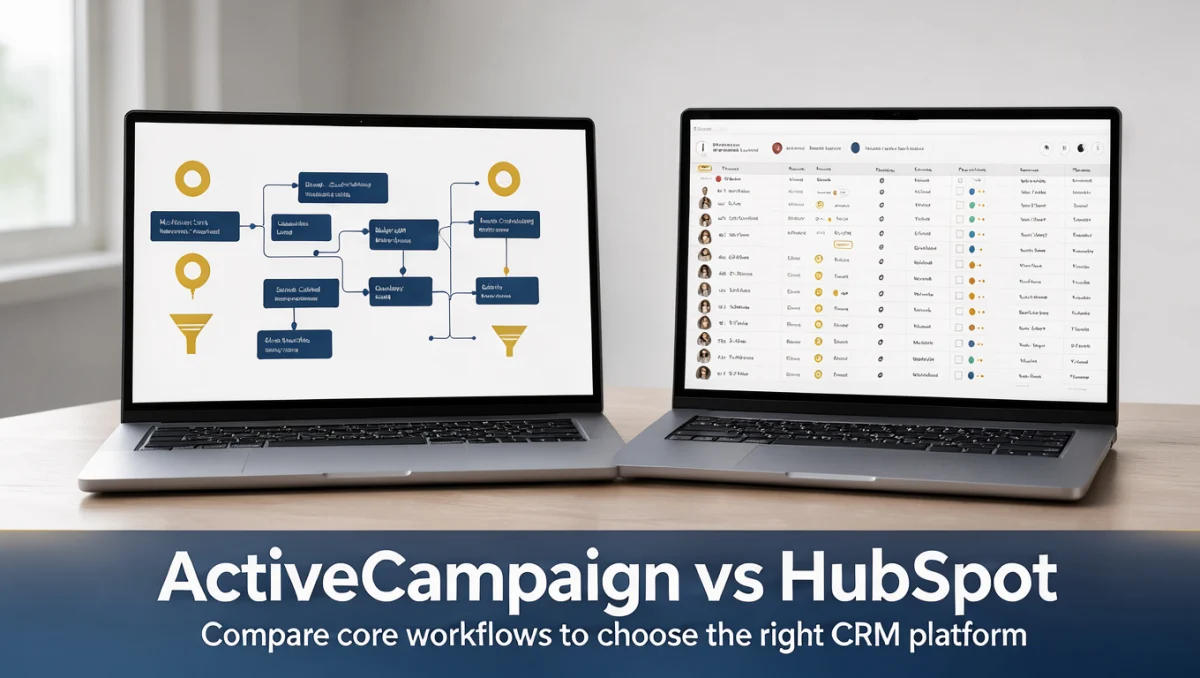
Understanding the Core Differences

When faced with the choice between ActiveCampaign and HubSpot, businesses need to pinpoint their primary operational needs. ActiveCampaign shines in granular marketing automation, focusing on intricate customer journey sequences and targeted messaging. It's ideal for teams that prioritize sophisticated, automated communication paths. Conversely, HubSpot excels as an all-in-one platform, unifying customer relationship management with sales, marketing, and service operations. It's designed for businesses seeking a centralized database that connects diverse team activities and provides a holistic view of the customer.
The decision often hinges on whether your team requires deep automation logic or a broad, integrated ecosystem. For those whose success relies on complex, multi-step email campaigns triggered by user behavior, ActiveCampaign offers specialized tools. For organizations aiming to align their marketing lead generation with sales pipeline tracking and customer support, HubSpot provides a more cohesive environment.
Ultimately, the best platform depends on whether you prioritize intricate automation workflows or a unified, cross-departmental customer database.
Key Distinctions and Positioning

ActiveCampaign is built around customer experience automation, allowing for conditional branching, detailed contact tagging, and segmented follow-ups to drive daily tasks. Its strength lies in creating visual workflow builders and enabling granular customer segmentation, making it a powerful tool for businesses that rely on automated subscriber nurture paths.
HubSpot, on the other hand, emphasizes a centralized customer relationship management database. It unites inbound lead capture, deal pipeline tracking, support ticketing, and content delivery within a single, unified ecosystem. Its core strength is a unified customer database connecting lead generation with deal tracking, making it suitable for organizations that prioritize unified visibility across distinct company roles.
| Tool | Primary Focus | Key Differentiator | Ideal Scenario |
|---|---|---|---|
| ActiveCampaign | Marketing Automation & CXA | Visual workflow builders & granular segmentation | Automated nurture paths are critical |
| HubSpot | Integrated CRM Suite | Unified customer database & cross-team visibility | Holistic view across sales, marketing, and service |
Feature Comparison
Advanced Automation Capabilities
ActiveCampaign offers sophisticated toolsets for building complex automation trees. Users can create multi-path branching logic based on contact behaviors, website visits, and interaction metrics. Its integrated deal management system ties directly into these automations, moving prospects through stages based on automated triggers.
Unified Customer Database
HubSpot provides a comprehensive suite that links lead generation forms, email delivery, deal pipelines, and customer ticket queues into unified contact timelines. Its contact timeline displays every interaction, form submission, and communication record chronologically, accessible across all teams. This holistic approach ensures that marketing software buyers can examine the depth of visual journey builders versus the comprehensiveness of contact databases before making a decision.
Ease of Use and Learning Curve
Getting started with ActiveCampaign may require an investment of time to grasp its tag structures, custom field relationships, and event triggers. Users comfortable with logic flowcharts tend to adapt smoothly, while newcomers might find the extensive configuration options challenging during initial campaign setups.
HubSpot prioritizes a unified navigation interface across its various operational hubs. Contact records, reporting dashboards, and campaign editors share a consistent layout, making standard operations intuitive for general team members who may handle multiple roles. This consistency aids in Marketing operations.
Pricing Structures and Value
ActiveCampaign structures its pricing tiers around contact volumes and the depth of its automation capabilities. Businesses should review the official ActiveCampaign pricing page to understand how contact tier bands impact monthly billing as their databases grow.
HubSpot’s model is organized across distinct functional hubs, each with varying tiers and user seat types. Potential buyers should inspect the official HubSpot pricing page to determine if mandatory onboarding fees or minimum user licenses apply to their intended package. Understanding these structures is key when comparing activecampaign vs hubspot.
Integration Ecosystems
Both platforms maintain extensive integration ecosystems, allowing for seamless data synchronization with third-party tools like payment processors, form providers, e-commerce stores, and webinar software.
ActiveCampaign relies on bi-directional data synchronization to ingest purchase and event data that can trigger automated messages. Buyers need to review official integration catalogs to confirm if specific connectors require third-party sync utilities.
HubSpot functions as a central data warehouse for external software, syncing contact attributes into consolidated records. It's important to verify on official documentation whether particular external connectors require specific subscription tiers for synchronization capabilities.
Audience Alignment
ActiveCampaign is well-suited for content creators, digital commerce operators, and agencies that need automated messaging workflows without committing to an enterprise-wide operational suite. It fits workflows where precise automated emails are the primary drivers of conversion goals.
HubSpot caters to growing commercial teams, B2B organizations, and enterprises that require collaborative visibility across marketing representatives, sales agents, and customer success staff within a single, centralized repository. This makes it a strong contender for businesses looking for comprehensive solutions from Best Software Reviews.
Support and Resources
ActiveCampaign outlines its available contact methods on its support directory. Buyers should confirm on the official website which communication channels, such as live chat or scheduled consultations, align with their specific subscription plan.
HubSpot provides multiple support tiers linked to account levels, supplemented by structured educational academies and user communities. Prospective buyers should confirm on the official HubSpot website which direct assistance channels correspond to their intended package.
Final Recommendation
ActiveCampaign is the recommended choice for organizations prioritizing sophisticated, behavior-driven automated communication paths. HubSpot is the better fit for companies that emphasize cross-team alignment, where marketing, sales, and service functions share a single system of record.