bestsoftwarereviews may earn a commission when you buy through links on this page, at no extra cost to you. This does not affect our ratings.
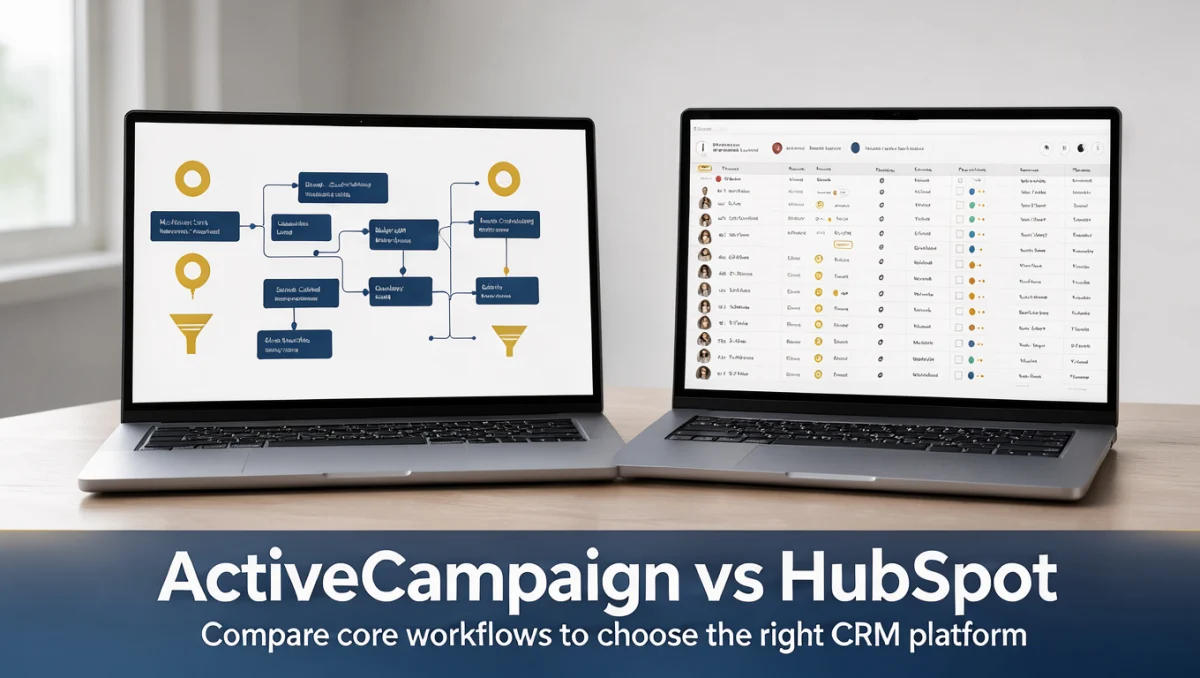
ActiveCampaign vs HubSpot is a core decision for organizations seeking to streamline customer communication, nurture leads, and coordinate marketing operations. Choosing between these platforms depends on whether an organization requires dedicated workflow automation for messaging sequences or an all-in-one suite connecting customer relationship management with broader business operations. Through the analytical lens of Best Software Reviews, both platforms address distinct operational models across contemporary sales and marketing teams.
Understanding your internal technical comfort level and operational priorities determines which platform delivers sustainable value. Teams managing direct email campaigns often weigh options differently from teams requiring cross-departmental alignment spanning customer service, content hosting, and pipeline tracking within a single environment.
Quick verdict: ActiveCampaign vs HubSpot yields an overall score of 8.0 out of 10. ActiveCampaign suits teams prioritizing granular email automation journeys, while HubSpot suits businesses seeking a unified customer relationship database connecting marketing pipelines with broader team operations. Neither fits organizations needing simple, static email announcements without automation logic.
| Metric | Details |
|---|---|
| bestsoftwarereviews score | 8.0 / 10 |
| Best for | Teams balancing dedicated marketing automation with structured pipeline management |
| Not ideal for | Solo operators who only require simple static newsletters without tracking contact interactions |
| Key strengths | Visual campaign builders, contact tracking, pipeline management, and contact segmentation |
| What to check before buying | Official plan comparison pages for user seat structures, contact thresholds, and onboarding requirements |
1. How bestsoftwarereviews Reviewed ActiveCampaign and HubSpot
This review looks at what ActiveCampaign and HubSpot are built to do, who they serve, and how they compare with similar tools, using the seven bestsoftwarereviews criteria: features, ease of use, pricing and value, integrations, audience fit, support and competitive position. Plans, prices and limits change often, so we point out what to confirm on the official website before you buy. This article was researched and drafted with the help of AI tools, then reviewed and edited by the bestsoftwarereviews Editorial Team.
2. Short Answer and Core Platform Distinctions
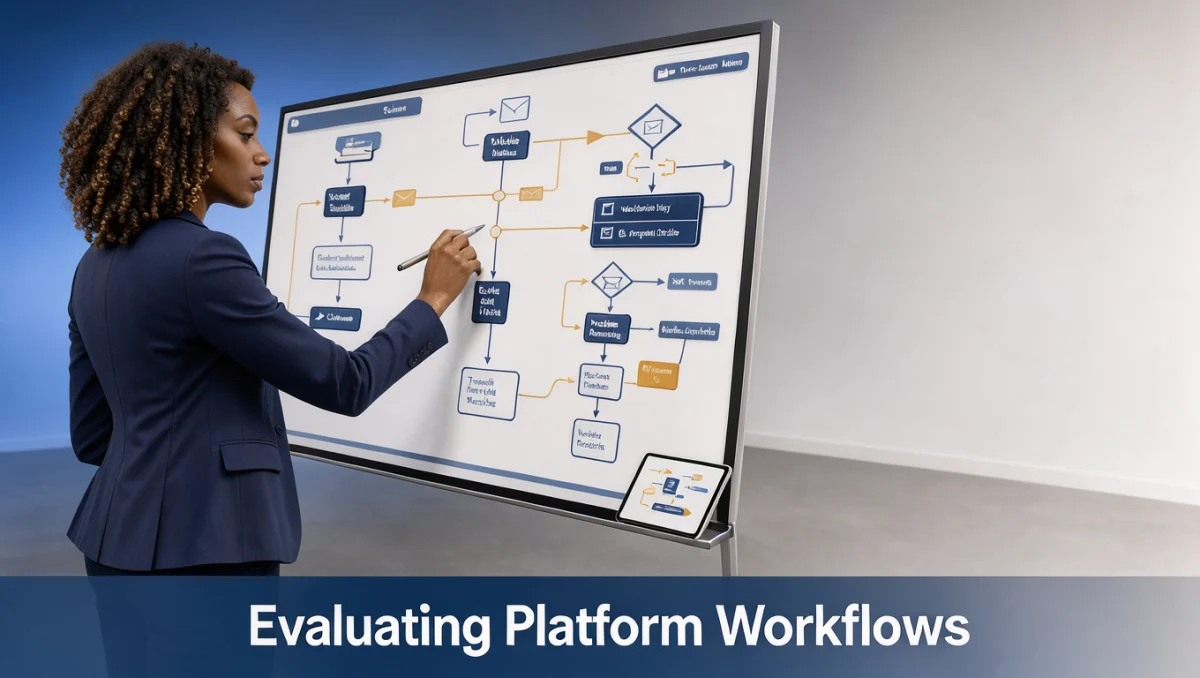
ActiveCampaign centers its experience on deep automation logic, message sequencing, and targeted subscriber communication. It functions primarily as a customer experience automation platform where conditional branching, customer tagging, and segmented follow-ups drive daily user tasks.
HubSpot centers its experience on a centralized customer relationship management database that unites diverse business activities. It serves teams looking to align inbound lead capture, deal pipeline tracking, support ticketing, and content delivery inside one unified ecosystem.
Evaluating software in the broader Marketing category requires assessing team workflows before committing resources. If your primary objective is sophisticated messaging pathways triggered by web behavior, ActiveCampaign addresses that operational model directly. If your priority is aligning marketing pipelines with administrative sales tracking and service tickets, HubSpot reflects that multi-departmental design.
3. Positioning Comparison
Both platforms address business growth but tackle operational coordination from distinct starting points. The table below outlines how each platform positions its primary value proposition.
| Tool | Best for | Core strength | Consider if |
|---|---|---|---|
| ActiveCampaign | Teams focused on detailed email sequences and contact interaction triggers | Multi-step visual workflow builders and granular customer segmentation | Your business model relies on automated subscriber nurture paths |
| HubSpot | Organizations wanting centralized contact records across sales and service | Unified customer database connecting lead generation with deal tracking | Your team prioritizes unified visibility across distinct company roles |
4. bestsoftwarereviews Criteria Comparison
4.1. Features
ActiveCampaign provides toolsets designed for creating complex automation trees. Users construct multi-path branching logic based on contact behaviors, site visits, and interaction metrics. Its internal deal management system links directly into these automations, moving prospective buyers across stages based on automated triggers.
HubSpot provides a broad suite linking lead generation forms, email delivery, deal pipelines, and customer ticket queues into unified contact timelines. Its contact timeline displays every page interaction, form fill, and communication record in a single chronological feed accessible across teams.
Marketing software buyers should examine how deeply their staff will use visual journey builders versus holistic contact databases before deciding.
4.2. Ease of Use
ActiveCampaign requires an investment of time to understand tag structures, custom field relationships, and event triggers. Users comfortable with logic flowcharts adapt smoothly, whereas novices may find the depth of configuration options demanding during initial campaign builds.
HubSpot emphasizes a unified navigation interface across its operational hubs. Contact records, reporting dashboards, and campaign editors share a consistent structural layout, making standard operations intuitive for general team members who handle multiple roles.
Platform complexity often correlates with functionality depth. Organizations should assess the administrative comfort of their team members when evaluating daily user interfaces.
4.3. Pricing and Value
Subscription software models in the automation space frequently scale based on contact list sizes, administrative seats, or feature access levels. Total cost structures evolve as subscriber lists expand or additional team members require dedicated logins.
ActiveCampaign structures its tiers around contact volumes and functional automation capability. Buyers must check the official ActiveCampaign pricing page to review how contact tier bands affect total monthly billing as databases grow.
HubSpot structures its model across distinct functional hubs with varying tiers and seat types. Buyers should inspect the official HubSpot pricing page to determine whether mandatory onboarding fees or user license minimums apply to their intended tier.
4.4. Integrations
Marketing platforms depend heavily on exchanging data with payment processors, form providers, e-commerce stores, and webinar software. Both platforms maintain extensive ecosystems allowing data synchronization across third-party tools.
ActiveCampaign relies on bi-directional data synchronization to ingest purchase activity and event data that trigger automated messages. Buyers must review official integration catalogs to confirm whether specific connectors require third-party sync utilities.
HubSpot functions as a central data warehouse for external software, syncing contact attributes into centralized records. Buyers should verify on official documentation whether particular external connectors require specific subscription tiers to access synchronization capabilities.
4.5. Audience Fit
ActiveCampaign serves content creators, digital commerce operators, and agencies seeking automated messaging workflows without adopting an enterprise-wide operational suite. It fits workflows where automated email precision drives conversion goals.
HubSpot serves growing commercial teams, business-to-business organizations, and enterprises that require collaborative visibility across marketing reps, sales agents, and customer success staff within one centralized repository.
Choosing between them requires identifying whether your primary operational unit is a specialized marketing campaign or a cross-functional business team.
4.6. Support
Reliable vendor support protects business continuity during campaign launches and system migrations. Support offerings in the software industry typically vary depending on subscription level, ranging from knowledge bases and community forums to direct chat or phone assistance.
ActiveCampaign outlines available contact methods on its support directory. Buyers should confirm on the official ActiveCampaign website which communication channels, such as live chat or scheduled consultations, align with their specific subscription plan.
HubSpot provides multiple support tiers linked to account level, supplemented by structured educational academies and user communities. Prospective buyers should confirm on the official HubSpot website what direct assistance channels correspond to their intended package.
4.7. Competitive Position
ActiveCampaign maintains a strong position among dedicated automation platforms, competing directly with alternatives focused on advanced subscriber messaging. Its reputation centers on granting operators detailed control over branching communication rules.
HubSpot maintains a strong presence among comprehensive inbound software suites, competing directly with enterprise customer relationship platforms. Its reputation centers on providing an organized system of record that spans the complete customer journey.
Both platforms represent mature market standards within their respective focus areas, giving buyers reliable stability regardless of selection.
5. How to Decide Between ActiveCampaign and HubSpot

Selecting between ActiveCampaign and HubSpot requires a structured evaluation of your internal team capabilities, immediate messaging goals, and administrative budget structures.
5.1. Assess Your Core Workflow Requirement
Determine whether your business needs advanced subscriber journey logic or unified cross-departmental records. If automated email nurturing with conditional triggers forms the core of your growth strategy, ActiveCampaign matches that objective. If coordinating marketing leads with sales reps and support agents is your primary bottleneck, HubSpot addresses that operational friction.
5.2. Evaluate Data Migration and Setup Commitment
Transitioning to any new CRM platform involves transferring contact records, cleaning subscription statuses, and re-establishing automated funnels. Many software vendors require extensive administrative setup before full operational readiness is achieved.
- Review existing contact tags, custom fields, and email templates prior to migration.
- Confirm internal technical ownership for building automation logic and managing integrations.
- Examine whether historical interaction data must be preserved during platform transition.
5.3. Audit Total Operational Expenditure
Software expenses rarely stop at the base monthly rate. Business buyers should verify potential secondary costs on official vendor channels prior to finalizing an agreement.
- Confirm seat pricing rules for administrative, view-only, and active team members.
- Verify contact list expansion pricing bands to prevent unexpected renewal increases.
- Check whether onboarding packages or technical setup consultations are mandatory for your chosen tier.
6. Frequently Asked Questions
How should a business decide between dedicated email automation and a full CRM platform?
Teams should evaluate whether their primary challenge is messaging complexity or inter-departmental visibility. If your staff spends most of its time designing conditional email sequences, a specialized automation tool meets that requirement. If sales representatives and support agents need immediate access to contact interactions, a centralized customer relationship platform provides better organizational cohesion.
What factors cause software subscription costs to expand over time?
Subscription software costs typically expand when businesses increase their total stored contacts or add operational team seats. Many platforms introduce tiered pricing based on database volume or restrict advanced automation features to higher package levels. Reviewing your projected contact growth on official pricing pages helps maintain budget predictability over extended deployment cycles.
What steps ensure a smooth contact database transition?
Organizations should clean existing contact databases by removing inactive subscribers and consolidating redundant tags before exporting records. Mapping custom properties accurately between old and new platforms prevents data loss during import. Testing small subscriber segments through newly built automation workflows ensures tracking triggers fire accurately prior to running full production campaigns.
When should an organization seek professional software consultation?
Businesses managing complex sales pipelines, multi-channel attribution tracking, or specialized regulatory requirements benefit from consulting certified implementation specialists. Outside technical guidance helps configure custom API data flows, establishes secure user permissions, and aligns software structure with team operating procedures to avoid costly architectural reconfiguration later.
7. Final Verdict
Both ActiveCampaign and HubSpot offer robust capabilities tailored to modern business communication, yet they solve operational challenges through distinct frameworks. Your organizational structure dictates the better choice.
| Criterion | Score / 10 | Reason |
|---|---|---|
| Features | 8.5 | Deep visual automation workflows balanced against comprehensive customer database management |
| Ease of Use | 7.5 | Visual builders require structured learning curves, while unified navigation simplifies multi-tool coordination |
| Pricing and Value | 7.0 | Verify official pricing tiers for user license minimums and database expansion scaling costs |
| Integrations | 8.0 | Extensive third-party ecosystems require verification regarding tier-specific connector availability |
| Audience Fit | 9.0 | Distinct alignment serving either automation specialists or collaborative sales and marketing teams |
| Support | 7.5 | Confirm available assistance channels and response parameters across respective official tier listings |
| Competitive Position | 8.5 | Established market positioning within dedicated email automation and full customer management suites |
Overall score: 8.0 / 10
ActiveCampaign is recommended for organizations seeking sophisticated automated communication paths driven by contact behavior. HubSpot is recommended for companies prioritizing cross-team alignment where marketing, sales, and service share a single system of record.
If you have questions about selecting software for your specific business workflow, contact our team through bestsoftwarereviews Contact or follow our industry updates on bestsoftwarereviews LinkedIn.