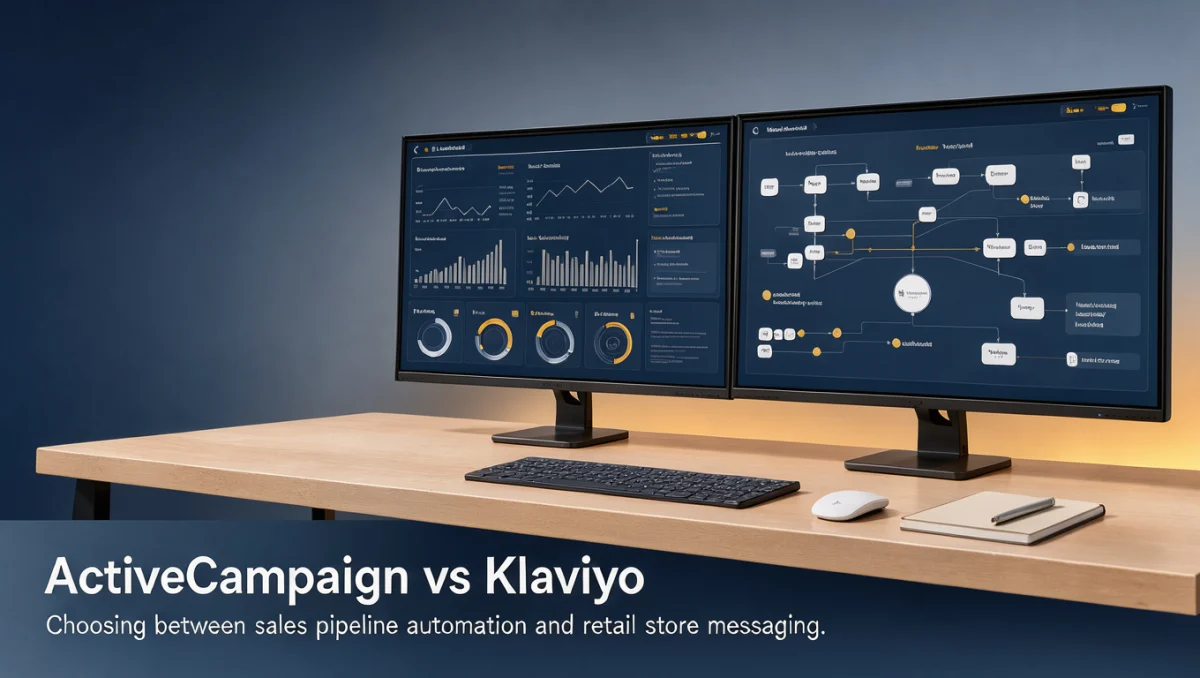
When comparing ActiveCampaign vs Klaviyo, businesses must consider their core operational models. ActiveCampaign offers a comprehensive suite for sales automation and customer relationship management, ideal for service-based industries. Conversely, Klaviyo is a powerhouse for ecommerce, specializing in data-driven customer journeys triggered by online transactions.
Both platforms are modern Marketing powerhouses but serve distinct business rhythms. ActiveCampaign acts as an advanced automation engine integrated with contact management, suitable for diverse commercial models. Klaviyo, however, is tailored for merchant data structures and behaviors related to online purchases. Aligning your business with the right architecture prevents costly future migrations and technical challenges.
Understanding the Core Differences
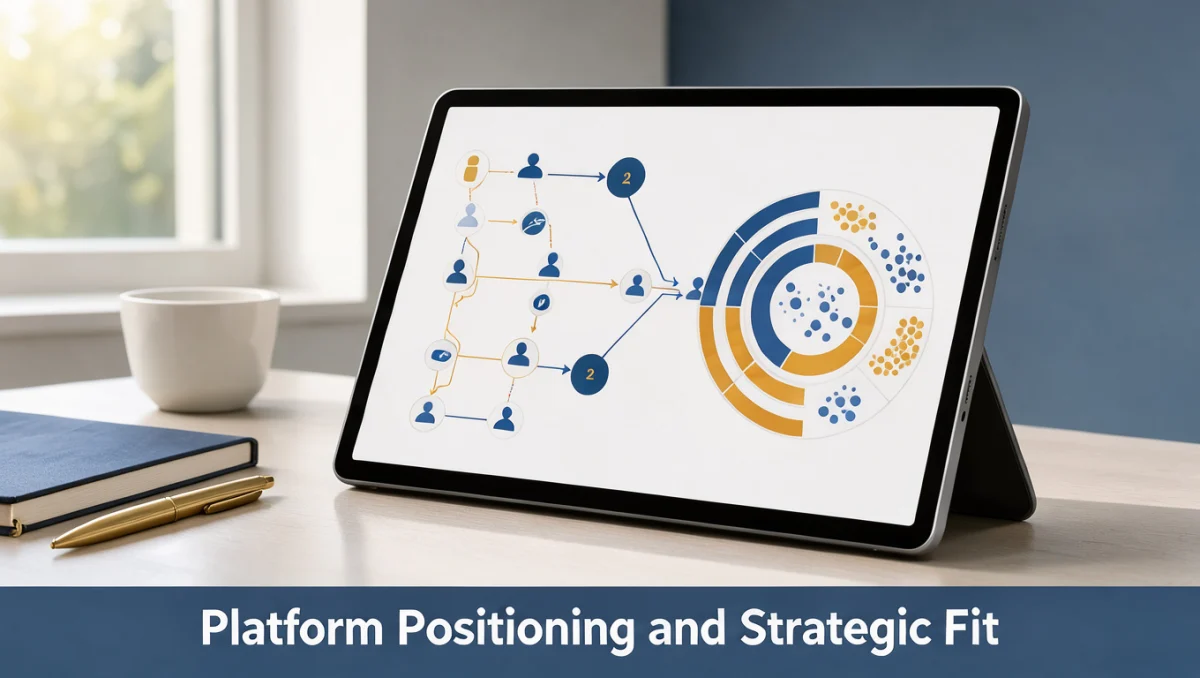
The fundamental distinction between ActiveCampaign and Klaviyo lies in their primary focus: revenue generation through sales pipelines and lead qualification versus revenue driven by transactional ecommerce events. ActiveCampaign provides a versatile automation canvas that blends email workflows with internal task management and contact pipeline oversight. This makes it a strong choice for professional services, subscription businesses, educational platforms, and any company with significant human-led sales processes.
Klaviyo, on the other hand, is purpose-built for the retail commerce lifecycle. Its data infrastructure is designed to process digital storefront actions like product views, cart additions, checkout completions, and refund processing. If your business relies on directly integrating order histories and browsing intent into automated message sequences, Klaviyo is the ideal fit. If your operations require tracking consultations, proposals, and pipeline milestones alongside marketing touchpoints, ActiveCampaign aligns more closely with your needs.
Key Strengths and Ideal Use Cases
| Platform | Best For | Core Strength | Consider If |
|---|---|---|---|
| ActiveCampaign | B2B services, education, agencies, mixed-model businesses. | Multi-path automation tied to deal stages and lead scoring. | Your operations involve proposals, client calls, or sales pipelines. |
| Klaviyo | Direct-to-consumer ecommerce, product catalogs. | Real-time store event sync and product-specific segmentation. | Your revenue depends on repeat retail checkouts and online consumer activity. |
Buyers should determine if their customer relationships are primarily transactional or relationship-driven. For communications requiring human intervention, like account management or pipeline progression, sales automation tools offer superior organization. For communications driven purely by automated triggers following an online shopping session, retail-focused platforms offer faster utility.
Feature Deep Dive: Automation and Segmentation

Advanced Automation Capabilities
ActiveCampaign features an automation builder centered on triggers, conditional splits, wait times, and internal system updates. Its visual canvas allows for complex, branched sequences that respond not only to email clicks or website visits but also to changes in deal stages, tag updates, and lead score thresholds. This enables marketing and sales teams to route contacts based on intricate behavioral criteria throughout extended sales cycles.
Klaviyo structures its automations through pre-configured flows designed for common ecommerce scenarios. These flows are triggered by specific retail activities such as abandoned carts, price drops on viewed items, or loyalty program milestones. While it supports branching based on purchase history and predicted customer lifetime value, its logic remains focused on driving customer transactions rather than managing internal sales tasks.
Sophisticated Audience Segmentation
Segmentation in ActiveCampaign utilizes tag-based systems, custom fields, website tracking events, and engagement metrics. Teams can group contacts by demographics, content consumption, or purchase readiness. This is particularly effective for complex B2B lead scoring, where prospects gain points for downloading resources, visiting specific service pages, or meeting qualification rules.
Klaviyo employs dynamic lists that update continuously based on store events, purchase frequency, and catalog interactions. Segment definitions can filter users who bought from a specific product category within a timeframe or viewed a product without purchasing. This granular retail attribute filtering empowers ecommerce brands to execute targeted promotions efficiently.
Contact Management and Sales Pipelines
ActiveCampaign includes native contact records that store conversation history, notes, assigned account owners, and visual deal pipelines. This functionality allows service-based companies to manage leads from initial inquiry to closing a deal without needing a separate sales tool for straightforward workflows.
Klaviyo concentrates its customer profiles on spending metrics, predicted purchase intervals, historical transactions, and communication channel engagement. It does not offer traditional B2B sales pipelines or lead distribution dashboards, as consumer retail workflows typically do not involve manual proposal stages or direct sales representative outreach.
User Experience and Learning Curve
Navigating the Interface
Setting up workflows in ActiveCampaign requires a solid understanding of how tags, lists, and custom fields interact across marketing campaigns and deal boards. Its deep branching capabilities mean new users must carefully plan their logic structures to avoid errors. Teams accustomed to simpler email tools often require time to adapt to its multi-step logic architecture.
Klaviyo offers a user experience focused on standard ecommerce playbooks. Merchants can launch essential flows quickly because the trigger logic aligns with typical retail benchmarks. However, mastering Klaviyo involves learning its data taxonomy, understanding how store metadata populates message templates, and grasping how predictive customer metrics are calculated.
Content Creation Tools
Both platforms provide drag-and-drop template builders for responsive email messages. ActiveCampaign supports flexible content blocks, personalized dynamic fields, and conditional formatting based on recipient tags or demographic data.
Klaviyo enhances its content builder with catalog feeds, dynamic cart elements, and personalized product recommendation blocks. Designing messages in Klaviyo feels intuitive for retail staff needing to incorporate live stock items and pricing updates into marketing campaigns without custom coding.
Pricing, Integrations, and Support
Understanding Pricing Models
Subscription costs for marketing automation platforms vary based on audience size, message volume, and feature needs. ActiveCampaign's pricing tiers often depend on the total number of active contacts and features like sales automation. It's crucial to verify how contact counts are calculated and if certain functionalities require higher plan levels or add-ons.
Klaviyo's pricing is typically based on active profiles and email/SMS sending volume. For ecommerce brands experiencing seasonal sales spikes, calculating the impact of high-volume periods on monthly expenses is essential. Reviewing their official pricing calculators can help model expected audience growth and ensure subscription costs remain viable.
Ecosystem and Connectivity
ActiveCampaign integrates with a wide array of external applications, including web form builders, learning management systems, appointment schedulers, and customer support platforms. This broad compatibility makes it adaptable for educational institutions, agencies, and consultancies with varied technology stacks.
Klaviyo maintains deep integrations with major ecommerce platforms, point-of-sale systems, and retail review networks. Its architecture is optimized for processing catalog inventory, customer checkouts, and shipping updates. Businesses not operating with an online shopping cart may find Klaviyo's retail-specific connectors less useful.
Customer Support and Resources
Both vendors offer extensive self-service knowledge bases, community forums, and training resources. When evaluating your options, check the official support pages to understand which channels (live chat, ticket submission, phone) are available for each subscription tier and their operating hours.
Making the Right Choice
Step 1: Evaluate Your Primary Conversion Event
Identify precisely when an inbound contact becomes a paying customer. If conversion occurs through a digital shopping cart, Klaviyo's event architecture is highly suitable. If conversion involves an agreement, consultation, custom invoice, or demo call, ActiveCampaign's pipeline tools are more appropriate.
Step 2: Map Your Automation Complexity
Outline your ideal customer communication sequence. If the sequence involves branching rules based on internal lead stages, form submissions, and team tasks, ActiveCampaign is the better choice. If the flow strictly follows order placements, browse abandonment, and product category interests, Klaviyo handles these efficiently.
Step 3: Assess Your Multi-Channel Strategy
Determine if your marketing strategy requires integrated sales pipelines or if the emphasis is solely on retail channels like email and SMS. Review the official pricing calculators for both platforms to model your expected audience growth and ensure the subscription costs are manageable long-term.
Frequently Asked Questions
What additional costs should I anticipate?
Beyond the base subscription, budget for services like list verification, professional template design, and potential third-party connector tools if your custom applications don't link directly. Allocating resources for migration and onboarding can prevent disruption.
When is a sales pipeline tool necessary?
A sales pipeline tool is needed if transactions involve personalized quotes, discovery calls, contract reviews, or manual follow-ups. If revenue comes entirely from automated self-service checkouts, a traditional sales pipeline is unnecessary.
Can I migrate data between these platforms?
Standard contact data, including names, emails, and custom fields, can be transferred via export files. However, dynamic automation histories and platform-specific metrics rarely transfer, requiring logic to be rebuilt natively.
What impacts message deliverability?
Deliverability relies on sending domain authentication, list hygiene, subscriber engagement, and content quality. Maintaining clean lists and verifying technical DNS records ensures high inbox placement.
Final Recommendation
Both ActiveCampaign and Klaviyo are powerful Marketing platforms, but they are designed for fundamentally different operational frameworks. ActiveCampaign excels in managing complex customer journeys that integrate automated messaging with sales pipelines and lead scoring. Klaviyo offers distinct advantages for online merchants needing real-time data synchronization from their product catalogs and shopping carts to drive repeat sales.
| Criterion | Score / 10 | Reason |
|---|---|---|
| Features | 8.5 / 10 | Both offer rich, tailored workflow capabilities for their respective business models. |
| Ease of Use | 8.0 / 10 | Requires onboarding due to complex rules and segmentation options. |
| Pricing and Value | 7.5 / 10 | Costs scale with volume; verify tier thresholds carefully. |
| Integrations | 8.0 / 10 | ActiveCampaign offers broad business integration; Klaviyo specializes in retail. |
| Audience Fit | 8.5 / 10 | Each closely matches its intended audience, separating B2B service from B2C retail. |
| Support | 7.5 / 10 | Thorough documentation; direct support varies by tier. |
| Competitive Position | 8.0 / 10 | Strong reputation in sales automation and retail communication sectors. |
| Overall score | 8.0 / 10 | Average reflecting specialized design, functional depth, and clear utility. |
For service businesses, consultants, agencies, and mixed-model operations needing lead tracking, ActiveCampaign is the recommended choice. For dedicated online retail merchants aiming to boost order value via automated cart and browse triggers, Klaviyo is the better fit. Thoroughly review your operational needs and check current plan details on the official vendor websites before deciding.
See More Best Software Reviews