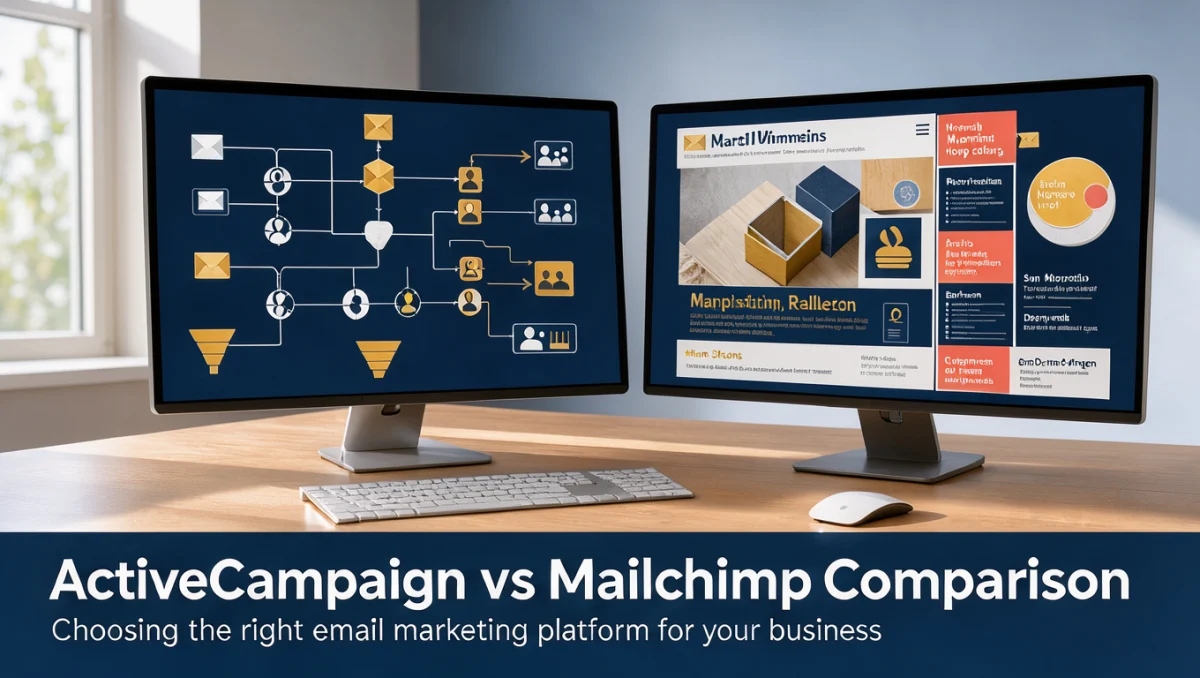
When comparing ActiveCampaign vs Mailchimp, you're looking at two distinct approaches to email marketing. ActiveCampaign excels in intricate automation and CRM integration, perfect for complex customer journeys. Mailchimp, on the other hand, shines with its user-friendly interface and streamlined approach to creating and sending newsletters, making it ideal for straightforward broadcast campaigns. Both platforms offer essential features like list management and campaign analytics, but their core designs cater to different operational priorities.
At Best Software Reviews, we meticulously analyze how each solution addresses practical business needs, from initial setup to ongoing management and scalability. For a broader understanding of the Marketing software landscape, explore our comparative guides that differentiate advanced automation tools from basic broadcasting systems.
Understanding the Core Differences
The primary divergence between ActiveCampaign and Mailchimp lies in their focus: ActiveCampaign prioritizes deep automation and sales pipeline management, enabling event-driven communications and sophisticated customer journey orchestration. Mailchimp centers its offerings on accessible design tools, efficient template management, and simple, list-based newsletter delivery. This makes ActiveCampaign a favorite for marketing teams needing detailed conditional logic and contact tracking, while Mailchimp appeals to individuals and small businesses prioritizing quick campaign creation and ease of use.
Feature Set and Automation Power
Automation Logic and Triggers
ActiveCampaign provides a powerful visual automation canvas where users can design complex workflows with split paths, conditional filters, wait timers, and goal achievements. This allows for routing subscribers based on actions like link clicks, field changes, or pipeline status updates. Mailchimp offers journey mapping primarily for standard sequences such as welcome emails and transactional messages, catering to users who do not require intricate multi-layered conditional logic.
Contact Management and Segmentation
ActiveCampaign utilizes flexible tagging and dynamic custom fields that automatically update through workflow actions, offering granular control over contact data. Mailchimp organizes contacts using tags, groups, and audience segments within defined lists. Businesses managing multiple distinct brands might find Mailchimp's list-based structure simpler, but should verify how additional lists affect billing.
User Experience and Ease of Use

Template Creation Workflow
Mailchimp is renowned for its intuitive drag-and-drop editor, enabling rapid email assembly with immediate visual feedback, making it excellent for users prioritizing quick design turnaround. ActiveCampaign also offers modern visual design tools, but its interface is denser due to extensive automation options, requiring more time for configuration. For seasonal announcements or basic layouts, Mailchimp often proves more straightforward.
Campaign Setup and Launch Routine
Launching a one-time broadcast in Mailchimp typically follows a linear wizard that guides users through recipients, sender details, and design review. ActiveCampaign supports similar broadcast functions but also emphasizes enrolling recipients into active workflows. Beginners may find ActiveCampaign's condition configuration requires more careful attention to avoid unintended messaging loops.
Pricing and Value Considerations
Both ActiveCampaign and Mailchimp employ subscription-based pricing models that scale with audience size and feature access. When evaluating value, it’s crucial to inspect the current tier structures and understand how costs are calculated.
Cost Drivers to Examine
Many email marketing platforms calculate subscription tiers based on the total number of contacts stored, not just active subscribers. Unsubscribed contacts might still count towards your monthly totals. Additionally, team seat licenses, monthly sending volume caps, and the definition of a ‘contact' can significantly impact your overall cost. Always confirm these details on the official pricing pages.
Integrations and Ecosystem Flexibility
Modern marketing tools need to connect seamlessly with other business systems. ActiveCampaign integrates closely with CRM platforms and custom webhooks to track buyer activity comprehensively. Mailchimp offers direct connections with popular e-commerce systems, landing page builders, and social networks for unified campaign tracking.
Data Synchronization Across Systems
For marketing teams, ensuring contact data flows smoothly between e-commerce platforms and email lists without manual imports is essential. When evaluating integrations, verify how contact fields and customer data synchronize with your existing store setup and check if purchase history or abandoned cart triggers integrate effectively.
Audience Fit for Different Business Types

Freelancers and Content Creators
Solo creators and newsletter writers often benefit from Mailchimp's straightforward layout generation and minimal technical upkeep. Its streamlined interface saves operational time when business revenue primarily relies on regular editorial content rather than complex sales sequences.
Growing Teams and B2B Organizations
ActiveCampaign is well-suited for B2B service firms, digital agencies, and expanding e-commerce operations that require lead scoring and robust pipeline management. It provides value for teams tracking prospect engagement through various sales stages, as contact records maintain detailed interaction histories.
Support Channels and Assistance
Access to technical guidance is crucial for setting up automations or resolving deliverability issues. Both providers offer varying support channels, including live chat, email support, and knowledge bases, which often depend on the subscription tier. Confirm the support entitlements included with each service level before making a decision.
Final Verdict: ActiveCampaign vs Mailchimp
Choosing between ActiveCampaign and Mailchimp hinges on your specific business requirements. If your operations involve complex customer journeys, conditional messaging, and CRM pipeline tracking, ActiveCampaign is the more functional choice. For businesses and creators prioritizing polished broadcast newsletters with minimal setup friction, Mailchimp offers an accessible and capable environment.
Explore more Best Software Reviews to make informed decisions about your business tools.