Starting a subscription box business with Subbly involves a clear understanding of your product, setting up recurring billing, and planning your shipping. While predictable revenue is a goal, lasting success hinges on reliable fulfillment and a smooth customer journey. At Best Software Reviews, we analyze business workflows to help founders build realistic and sustainable operations.
Subbly is a specialized platform designed for subscription commerce, managing customer accounts, recurring payments, and order generation. When expanding into modern E-commerce, proper setup of your subscription software from the outset prevents costly billing errors and inventory issues. A structured approach ensures your products are ready, checkout processes are configured, and subscribers are retained through excellent delivery standards.
Quick Answer: To start a subscription box business with Subbly, focus on five key stages: defining your box concept, securing supplier inventory, configuring recurring billing on the platform, establishing fulfillment processes, and monitoring customer retention metrics in the first month.
| Evaluation Factor | Details |
|---|---|
| Ideal For | Founders launching physical recurring subscription boxes |
| Prerequisites | Product samples, box dimensions, shipping accounts, payment gateways |
| Outcome | An active storefront, automated order schedules, and a practical fulfillment plan |
Defining Your Subscription Box Concept

Before diving into software setup, assemble crucial product and operational data. Gathering packaging dimensions, supplier lead times, and financial policies early on will streamline the configuration process and prevent future delays.
- Product Prototypes & Dimensions: Have physical box prototypes and exact shipping dimensions ready to accurately calculate volumetric shipping rates.
- Supplier Information: Confirm supplier wholesale costs and minimum lead times for recurring monthly replenishment to ensure consistent stock.
- Subscription Policies: Establish clear policies covering renewal dates, cutoff windows for changes, and customer cancellation rules to manage expectations.
- Financial Accounts: Secure commercial merchant accounts and necessary regional tax identification numbers for processing online payments efficiently.
Step-by-Step Workflow for Launching with Subbly
Transforming your physical logistics into seamless software settings is key to building your subscription store. Follow these operational milestones, verifying specific setup requirements on the official Subbly documentation during configuration.
- Determine Your Subscription Cadence: Decide if your box ships on a fixed monthly date or follows anniversary cycles. Subscription commerce platforms rely on renewal rules to trigger invoices, so confirming billing intervals prevents premature dispatches.
- Structure Product Tiers and Box Options: Define whether customers receive a uniform curation or can customize items. Clearly document your box variations to ensure inventory tracking accurately matches subscriber selections.
- Establish Shipping Cutoff Rules: Set calendar boundaries to determine if a new buyer receives the current monthly edition or enters the queue for the next cycle. Verifying these scheduling settings prevents unexpected backorders and ensures timely delivery.
- Connect Payment Processing and Store Checkout: Link your merchant processor and configure your checkout steps to clearly present recurring terms. Transparent renewal notices help minimize future payment disputes and customer churn.
- Test Sample Order Generation: Run simulated subscription orders through the system to inspect how generated invoices feed into your fulfillment queue. Verifying packing lists before public launch ensures your packing line receives accurate item quantities.
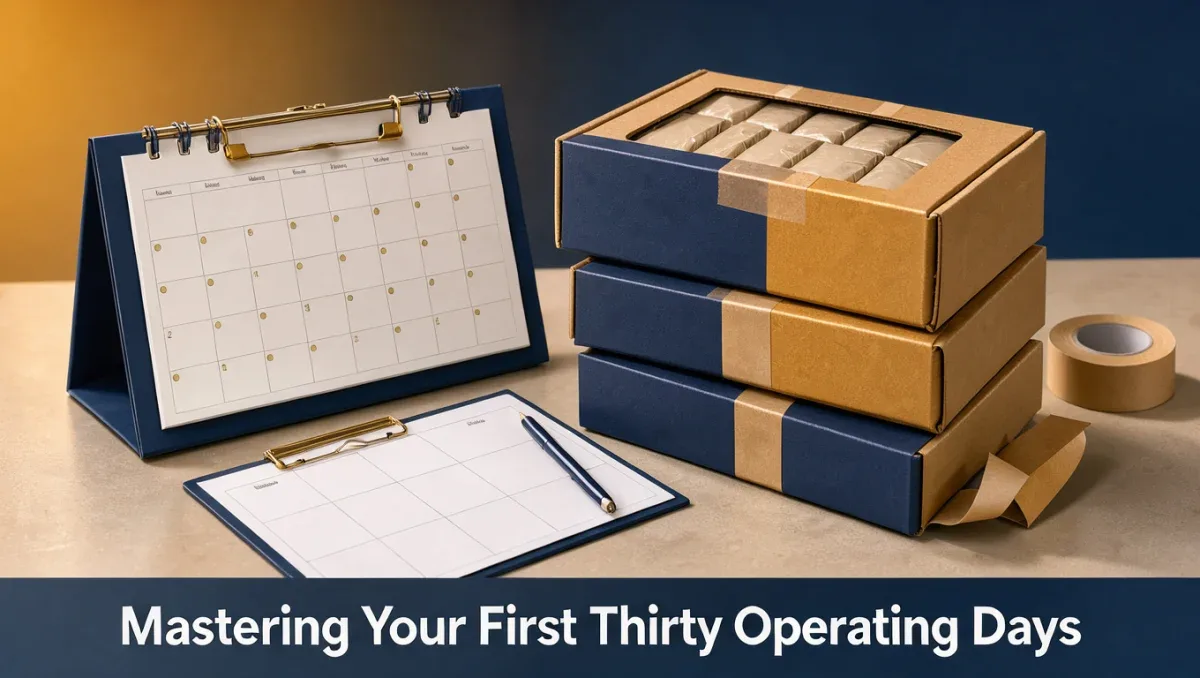
Navigating Your First 30 Days of Operation
The initial month of operating your subscription box business is critical for determining if your fulfillment and support processes can handle sustained recurring volume. Building consistent weekly routines will keep operational chaos at bay, especially during peak shipping windows.
| Week | Routine to Build | Importance |
|---|---|---|
| Week 1 | Verify subscriber count against physical supplier inventory | Prevents stock shortages before the monthly ordering window closes. |
| Week 2 | Audit recurring payment renewals and address declined billing attempts | Recovers potential churn before the final warehouse packaging phase. |
| Week 3 | Assemble packaging, print batch shipping labels, and conduct weight checks | Ensures parcels meet carrier postage requirements and reduces dispatch delays. |
| Week 4 | Review delivery tracking confirmations and audit incoming support tickets | Identifies carrier transit damage early and refines future box protection strategies. |
Common Pitfalls and How to Avoid Them
New subscription box creators often encounter logistical challenges that can quickly deplete initial operating capital. Recognizing these common errors will help you protect your margins and maintain customer satisfaction.
- Underestimating Shipping Rate Zones: Regional carrier surcharges can significantly impact box margins. Obtain quotes for national postage brackets across distant zones before finalizing public subscription pricing.
- Ignoring Supplier Manufacturing Lead Times: Delays from suppliers can disrupt your packing schedule. Maintain a buffer of non-perishable inventory to mitigate supply chain interruptions.
- Vague Cancellation Terms: Unclear cutoff dates lead to disputes when subscribers cancel after a box has shipped. Post transparent cancellation deadlines on your customer portal and checkout summary.
- Overcomplicating Early Product Variations: Offering too many customization choices complicates warehouse assembly, especially for solo operators. Start with a single curated box before introducing multi-item personalization options.
When to Seek Expert Assistance
While software handles orders and automated billing, complex logistics and fiscal compliance often necessitate professional advice. Knowing when to escalate challenges is crucial for protecting your brand reputation and operational health.
- Financial Compliance: Consult a licensed accountant or tax specialist for calculating multi-state or international sales tax liabilities on tangible goods.
- Logistics & Packaging: Reach out to professional packaging engineers if shipping tests reveal damaged fragile merchandise during transit.
- Platform Support: Contact official Subbly support teams if recurring billing triggers fail to generate expected batch orders in your fulfillment queue.
- Scalability: Engage fulfillment center specialists if monthly parcel volume exceeds your personal packing capacity and begins causing shipping delays.
Frequently Asked Questions
What basic equipment is needed for home-based packing?
Operators starting from home require a calibrated digital postal scale, a dedicated shipping label printer, sturdy packaging tape dispensers, and clean storage shelving. Proper equipment ensures packages meet carrier guidelines precisely, avoiding unexpected postage surcharges or delivery delays.
How far in advance should inventory be ordered?
Subscription operators should aim to receive inventory at least two weeks before their scheduled packing window. This lead time allows for inspecting shipments, reconciling unit counts, and assembling custom inserts without risking late dispatches.
Why do subscription box businesses experience billing churn?
Billing churn commonly occurs due to expired credit cards, fraud filters flagging online charges, or insufficient funds upon renewal. Automated dunning notifications can help recover past-due payments, protecting recurring cash flow and preventing unnecessary cancellations.
When is it time to transition to a fulfillment warehouse?
Transitioning to a third-party logistics warehouse becomes advisable when monthly box volume consumes unsustainable personal time or outgrows available home storage. Outsourcing assembly allows founders to focus on product curation and retention strategies while professionals manage shipping.
Your Next Steps to Success
Launching your subscription box business demands systematic execution across branding, software setup, and logistics. Complete these practical actions to guide your venture toward its first successful shipment and a thriving future.
- Finalize Unit Economics: Balance product costs, packaging, postage, and software merchant fees to ensure profitability.
- Configure Your Store: Set up your store catalog and recurring billing intervals, verifying current tier capabilities on the official Subbly website.
- Test Your Product Delivery: Produce sample boxes and conduct drop tests with your chosen shipping carrier to confirm contents arrive intact.
- Establish Operating Routines: Define your weekly schedule to manage subscriber inquiries, inventory audits, and batch fulfillment efficiently.
For questions about selecting software, contact the Best Software Reviews team or follow Best Software Reviews on LinkedIn for new insights and comparisons.
See More how to start a subscription box business with subbly