Understanding PandaDoc's Automated Billing Solution
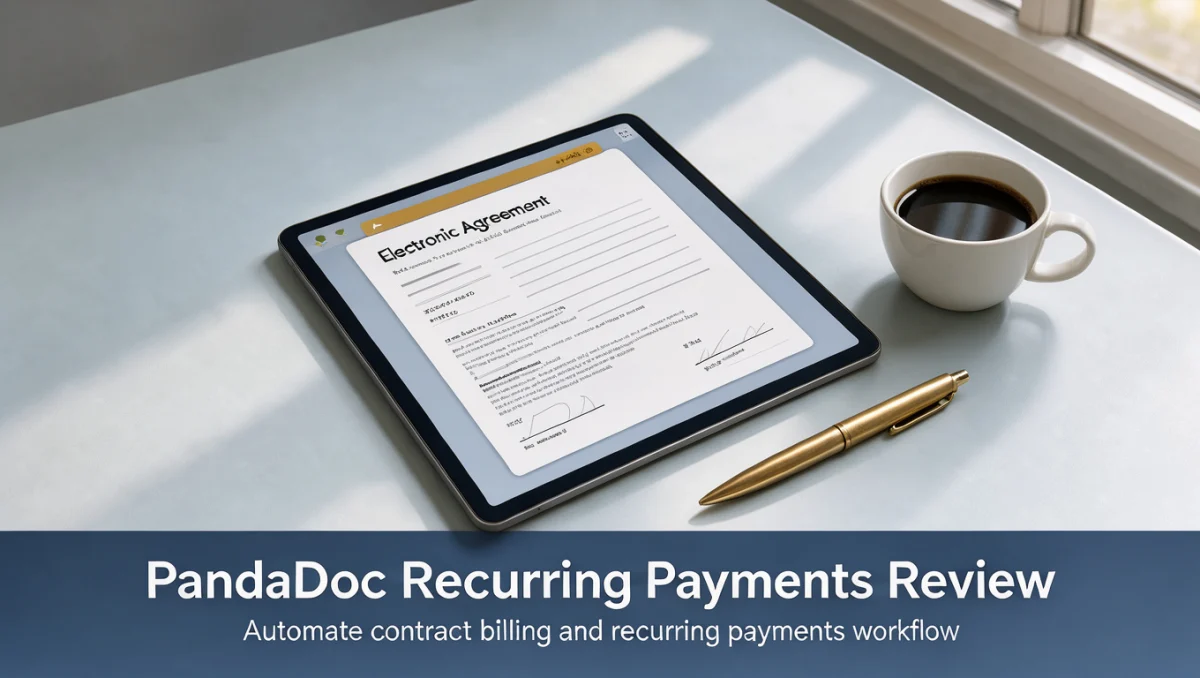
PandaDoc's recurring payments feature empowers businesses to merge contract finalization with automated subscription billing within a cohesive workflow. For sales departments, creative agencies, and consulting firms, managing ongoing client retainers via document agreements significantly cuts down administrative burdens and prevents payment delays. This review delves into how PandaDoc's capabilities align with contemporary business needs in 2026, aiding potential users in assessing its fit for their regular billing processes. By embedding regular payment intervals directly into client contracts, this platform bridges the gap often found between document approval and recurring fee collection, enhancing cash flow predictability without manual invoicing.
How This Review Was Conducted
This assessment examines PandaDoc's core functionalities, target audience, and competitive standing against similar tools. Our evaluation is based on seven key criteria: features, usability, pricing, integrations, audience suitability, support, and market position. We advise confirming the latest plan details, pricing, and limitations directly on the official website, as these aspects are subject to frequent changes. This article was compiled with AI assistance and thoroughly reviewed by the editorial team.
PandaDoc: A Unified Platform for Document Management
PandaDoc serves as a comprehensive document management and automation system, facilitating the creation, dispatch, tracking, and execution of business documents. It supports proposals, quotes, contracts, and invoices, offering teams standardized templates and digital signing capabilities. The platform aims to streamline sales cycles by consolidating document preparation and electronic signatures.
It is primarily designed for commercial sales organizations, professional service agencies, independent consultants, and operational teams generating client agreements. For businesses with subscription services, retainer packages, or ongoing maintenance contracts, embedding recurring payment authorization within the signed document eliminates the need for subsequent manual invoicing, a common pain point addressed by such software. Many teams seeking reliable Sales solutions opt for document workflow tools that manage both contract signing and ongoing automated collections to prevent revenue loss.
Key Features for Seamless Transactions
PandaDoc integrates document authoring, legal signing, and financial transaction scheduling into its core workflow. Understanding these functionalities is crucial for assessing how well the software supports ongoing commercial agreements.
Document Creation and Contract Templating
The platform features a visual document builder enabling users to construct contracts, service level agreements, and recurring proposals from pre-defined content blocks. Dynamic tokens, pricing tables, and terms of service can be integrated into reusable templates. This standardization ensures consistent contract language from sales representatives and reduces manual drafting for retainer packages.
Electronic Signatures and Binding Execution
The electronic signature feature is central, allowing multiple parties to sign agreements sequentially. Signers receive email notifications and can complete signatures on various devices without needing to create new accounts. Audit trails track signature timestamps and viewing activity, providing verifiable proof of agreement.
Automated Payment Collection with Recurring Intervals
This functionality enables users to configure ongoing charge schedules directly within contract pricing tables. Senders define billing cycles (monthly, quarterly, annual) along with the initial agreement value. Upon signing, clients provide payment details processed through integrated merchant gateways, establishing automated future charges without manual invoice generation.
Document Tracking and Client Engagement Insights
Real-time notifications alert senders when clients open, view, or sign agreements. Document analytics reveal how much time recipients spend on specific sections, helping sales representatives anticipate client questions. This visibility is particularly useful in complex service negotiations involving recurring fees.
User Experience and Learning Curve
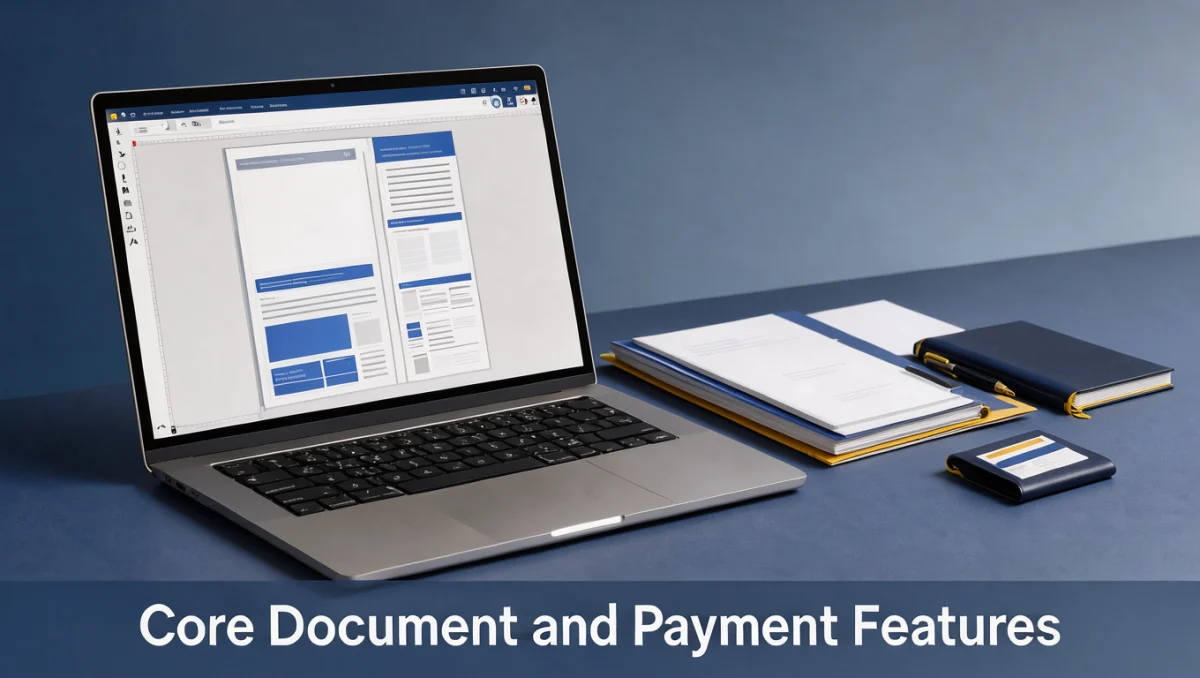
PandaDoc boasts a drag-and-drop document editor designed for minimal user training. Template creation and the insertion of recurring payment tables follow a structured layout, enabling users to build proposals without specialized coding skills. The recipient signing process is straightforward, guiding clients through required fields and payment information collection.
However, setting up intricate recurring payment arrangements might pose a slight challenge for those new to merchant gateway integrations. Properly aligning payment processor requirements with contract terms demands careful initial setup. Reviewing user guides and official documentation is recommended to ensure smooth management of recurring billing cycles.
Advantages and Disadvantages of PandaDoc for Recurring Agreements
Evaluating the benefits and limitations helps determine if contract-based recurring billing is a good fit for your business model.
Core Advantages
- Consolidates contract signing and recurring billing authorization into a single client interaction.
- Minimizes administrative tasks associated with manual monthly invoicing and follow-ups.
- Offers customizable templates and reusable content libraries for consistent contract terms.
- Provides detailed document activity tracking for recipient engagement insights.
- Simplifies the signing and payment submission process for clients.
Potential Drawbacks
- Complex contract amendments or mid-cycle recurring payment adjustments might necessitate new document generation or manual changes in gateway portals.
- Businesses managing high-volume micro-transactions or physical retail sales might need dedicated billing engines instead of document automation tools.
- Accounting integration requires careful reconciliation planning; consulting a professional is advised for configuring automated tax and ledger syncs.
PandaDoc Versus Competitors
Understanding PandaDoc's position relative to alternatives clarifies its unique offering in the document automation market.
| Platform | Target Audience | Primary Focus | Ideal For |
|---|---|---|---|
| PandaDoc | Sales teams, agencies, service firms | Document creation, e-signatures, integrated recurring payment collection | Combining proposals, contracts, and automated client billing |
| DocuSign | Enterprise legal, HR | Dedicated e-signature workflows, agreement lifecycle management | Signature execution without built-in authoring or sales proposals |
| Adobe Acrobat Sign | Corporate enterprises, creative teams | PDF-centric e-signatures, enterprise document governance | Workflows centered on standardized PDF forms |
| Proposify | Agencies, dedicated sales teams | Sales proposal creation, pitch deck tracking | Focusing exclusively on sales proposal aesthetics |
While DocuSign concentrates on signature workflows, PandaDoc emphasizes the complete document process, including interactive pricing and contract-based recurring payment capture. Adobe Acrobat Sign is often chosen by organizations operating primarily with standardized PDF forms, whereas PandaDoc appeals to teams preferring interactive document creation and bundled payment workflows. Proposify excels in sales proposal design, but PandaDoc extends its capabilities to broader commercial documents like contracts and recurring billing retainers.
Ideal Users for PandaDoc's Recurring Payments

Different business profiles can leverage document automation with integrated recurring billing in unique ways.
Freelancers and Consultants
Independent professionals offering monthly advisory services or routine consulting find value in simultaneously securing signatures and billing authorization. This allows for immediate establishment of recurring schedules upon contract completion.
Small Business Owners
Small service companies, such as marketing agencies or IT support providers, often face challenges with late payments. Automating recurring collections through signed agreements ensures predictable cash flow and reduces time spent on chasing receivables.
Sales and Marketing Teams
Commercial sales groups managing ongoing software subscriptions or managed service contracts benefit from rapid execution. Enabling clients to review terms, approve pricing, and activate recurring billing within a single document accelerates deal closure.
Corporate Operations Staff
Operations professionals managing regular vendor or facilities contracts can standardize terms and automate payment schedules, ensuring compliance and timely disbursements without repetitive administrative data entry.
Who Should Consider Alternatives
Businesses focused on transactional e-commerce, retail sales, or high-volume subscription services with numerous digital subscribers should opt for specialized recurring billing software or merchant platforms. PandaDoc is best suited for agreement-driven transactions, not standard shopping cart checkouts.
Selecting the Appropriate Plan for Recurring Payments
Software subscription tiers are typically structured around varying organizational needs and feature access. When evaluating recurring billing workflows, assessing specific commercial criteria is essential before committing to a plan.
| Key Considerations on the Official Website | Importance |
|---|---|
| Payment Gateway Compatibility | Ensures your existing merchant processing account seamlessly connects with the document payment system. |
| Recurring Billing Interval Options | Confirms that options like weekly, monthly, quarterly, or annual schedules align with your client contracts. |
| Multi-Currency Payment Handling | Determines if clients in different countries can complete recurring agreements using their local currency. |
| Template Sharing and User Permissions | Governs administrative control over editing rights for team contract drafts. |
| CRM and Accounting Synchronization | Verifies how client payment statuses integrate with external customer records and general ledgers. |
Before finalizing a decision, review the official plan comparison table to identify where recurring payment capabilities are included. We recommend documenting your anticipated monthly contract volume, user count, and required payment options prior to making a final selection. To learn more about pandadoc recurring payments, consult the official website.
Frequently Asked Questions about Recurring Billing
What should be defined before setting up recurring payment schedules in contracts?
Buyers should clearly define their billing frequencies, renewal terms, and cancellation policies before publishing recurring agreements. It is crucial to verify that connected payment processors support automated recurring deductions without requiring repeated client approvals for each cycle.
What operational details require verification before adopting contract-driven recurring billing?
Organizations must confirm merchant gateway fees, procedures for handling failed transactions, and currency support directly with the provider. Establishing clear customer dispute mechanisms and transparent renewal notifications is vital for maintaining positive client relationships over time.
Why consult an accountant before configuring automated recurring billing?
Consulting a financial professional ensures that automated subscription revenue complies with regional tax regulations, sales tax calculations, and revenue recognition standards. Proper ledger categorization prevents reconciliation discrepancies between payment records and formal accounting statements.
How should service businesses evaluate contract management software with payment collection?
Teams should assess whether the software simplifies the client signing experience while offering dependable contract tracking. Evaluating ease of document authoring, clarity of the recipient interface, and post-signing payment automation helps identify solutions that eliminate manual invoicing delays.
When should a growing team upgrade to automated recurring billing?
Teams should consider integrated recurring billing when the effort spent chasing monthly retainer invoices consumes significant administrative time. If uncollected receivables impede project operations, collecting automated billing credentials during contract execution offers immediate relief.
Final Verdict on PandaDoc's Recurring Payment System
PandaDoc's recurring payments effectively bridge commercial contract execution with automated client billing. By enabling businesses to present interactive proposals, secure legally binding electronic signatures, and establish regular subscription payments in a single transaction, the platform eliminates tedious administrative steps that impede revenue capture. Best Software Reviews scores PandaDoc an overall 7.8/10. For professional service firms, creative agencies, and B2B sales teams managing recurring retainer contracts, PandaDoc provides a streamlined approach to contract execution and cash flow management. While simpler signature tools might suffice for solo users with basic needs, and high-volume online retail businesses should use dedicated e-commerce platforms, PandaDoc is a strong contender for agreement-driven transactions.
| Criterion | Score /10 | Reason |
|---|---|---|
| Features | 8.5/10 | Unifies document generation, e-signatures, and contract-based recurring billing within streamlined workflows. |
| Ease of Use | 8.0/10 | The drag-and-drop editor and clear client signing interface offer straightforward navigation. |
| Pricing and Value | 7.0/10 | Value is contingent on the need for bundled recurring payment collection within contracts versus separate billing tools. |
| Integrations | 7.5/10 | Verify compatibility with external payment processors, CRMs, and accounting software on the official website. |
| Audience Fit | 8.5/10 | Highly suitable for agencies, consultants, and sales teams needing recurring revenue collection tied to signed agreements. |
| Support | 7.0/10 | Confirm available customer support channels and documentation directly on the vendor's website. |
| Competitive Position | 8.0/10 | Maintains a distinct focus on integrating document automation with payment collection, differentiating it from standalone signature software. |