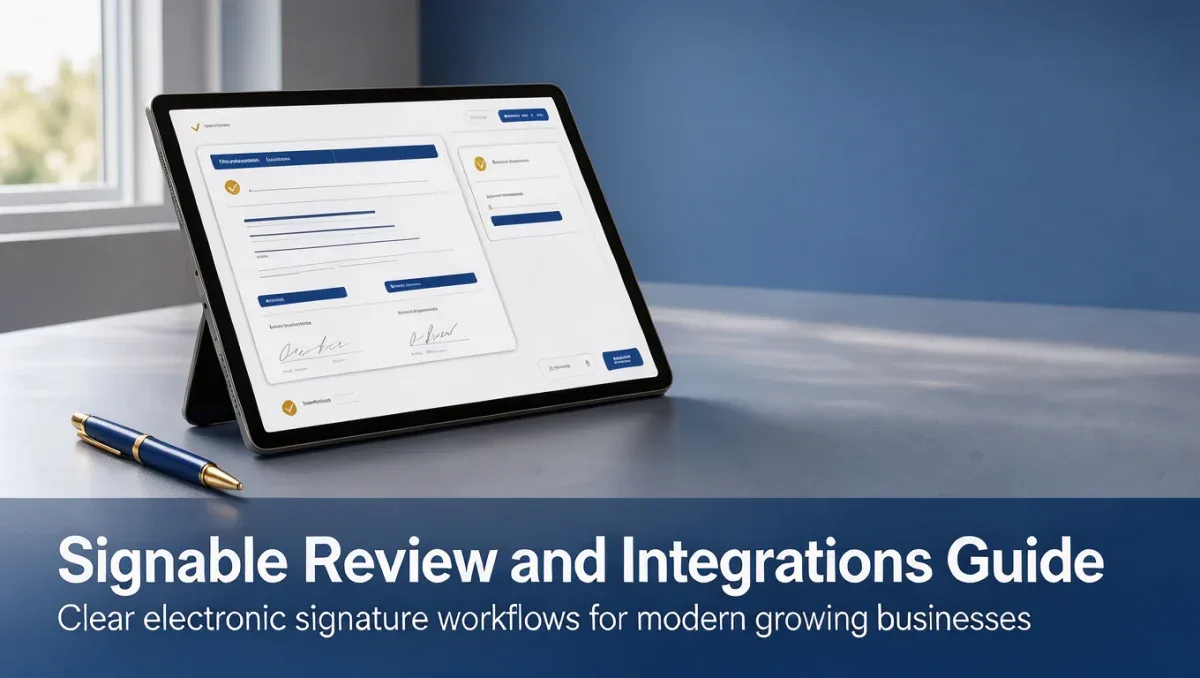
Signable integrations and core electronic signature functionalities empower businesses to manage legally binding agreements digitally, eliminating paper-based delays. When selecting software from the Collaboration & Productivity category, understanding how signature requests align with daily operations is crucial. Our analysis at Best Software Reviews prioritizes practical application, ease of setup, and functional compatibility.
Electronic signature platforms are instrumental in simplifying client onboarding, vendor contracting, and internal approvals across various industries. Teams considering signable integrations must ensure signature tracking aligns with their existing records management systems before making a commitment.
Quick Verdict: Signable achieves an overall Best Software Reviews score of 7.8/10. It is best suited for small businesses, agencies, and operational teams requiring uncomplicated electronic signature delivery without extensive setup. It may not be the ideal choice for large enterprises needing comprehensive contract lifecycle management or advanced multi-party legal negotiation tools.
| Metric | Details |
|---|---|
| Best Software Reviews Score | 7.8 / 10 |
| Ideal For | Small businesses, independent operators, and teams seeking direct electronic signature collection. |
| Not Ideal For | Enterprises requiring extensive contract lifecycle management or automated legal authoring suites. |
| Key Strengths | Core electronic signature handling, document audit tracking, straightforward signer experience. |
| Pre-purchase Check | Confirm user access allocations and connector compatibility on the official website. |
Understanding Signable's Purpose and Target Audience
Signable is an electronic signature application designed to facilitate digital agreement execution for organizations. It replaces manual processes like scanning, printing, and mailing with digital document preparation, sending, and legal signing. Independent consultants, recruitment agencies, property managers, and administrative departments frequently adopt this type of tool to expedite transaction times.
Readers seeking objective guidance from Best Software Reviews will find that Signable concentrates specifically on the core execution of signatures. Organizations that handle a high volume of client service agreements, employment offers, and supplier waivers benefit from structured and traceable signature gathering.
- Small and medium-sized business operators needing quick turnaround on recurring client contracts.
- Human resources and operations coordinators managing paperwork for distributed employee onboarding.
- Agencies and consultancies requiring efficient document dispatch and signature confirmation.
Key Functions of Signable

Electronic signature platforms address specific document governance tasks within everyday business administration. Understanding these functional areas ensures that your organization effectively evaluates the right capabilities during its software review.
Preparing Documents and Placing Fields
Signable allows teams to upload standard digital files, designate signature and date fields, and assign specific completion areas to identified signers. When setting up templates, users should assess the ease with which reusable templates can be saved for routine contracts like non-disclosure agreements.
Automated Document Sending and Monitoring
The platform enables the direct sending of signature requests to recipients via email, complete with automated tracking. Administrators can monitor when a recipient opens an agreement, fills in fields, or requires reminders to finalize the transaction.
Digital Audit Trails and Completion Certificates
Upon completion of all required signature fields, electronic signature platforms generate verifiable audit trails. These trails include completion timestamps, signer email confirmations, and digital verification records. Businesses should review these audit outputs with legal or compliance advisors to ensure alignment with relevant digital signature regulations.
Ease of Use and Initial Setup
Electronic signature solutions typically offer a low barrier to entry compared to comprehensive enterprise resource systems. Signable provides a clear process from document upload to recipient dispatch, allowing new team members to send agreements quickly.
Since signers do not require software accounts to review and sign agreements, the experience for the recipient is streamlined. However, administrative setup demands careful planning regarding template organization, team permission levels, and naming conventions for completed documents.
| User Experience Area | New User Expectation | Recommended Action |
|---|---|---|
| Signer experience | Minimal friction, browser access needed to sign. | Send a test agreement internally to verify mobile responsiveness. |
| Template creation | Direct drag-and-drop field placement. | Create two standard templates before client rollout. |
| Administrative management | Centralized document tracking and status monitoring. | Establish clear document naming conventions for easy retrieval. |
Evaluating Signable Over a Two-Week Period
Best Software Reviews suggests a structured fourteen-day testing cycle for assessing electronic signature tools. This phased approach tests functional requirements without disrupting ongoing business operations.
- Days 1-3: Upload standard business agreements and test basic signature field assignments with internal colleagues as signers.
- Days 4-7: Evaluate automated reminders, audit log generation, and mobile signing capabilities on various handheld devices.
- Days 8-14: Review the official Signable integrations directory to confirm file exports to your storage systems and assess team permissions.
Signable's Strengths and Potential Limitations
Every business software platform involves compromises between specialization and broad enterprise functionality. Evaluating these characteristics helps buyers match their document needs with the software's capabilities.
| Area | Shines When | May Fall Short When |
|---|---|---|
| Operational simplicity | Teams need direct signature requests without complex onboarding. | Organizations require automated multi-stage contract redlining and legal drafting. |
| Recipient interaction | External parties need to sign contracts rapidly via any web browser. | Workflows necessitate complex identity verification beyond standard email confirmation. |
| Template reuse | Staff frequently send standardized agreements like NDAs. | Agreements involve dynamic clauses that update based on algorithmic rules. |
| Workflow connectivity | Documents route cleanly to basic archiving and notification systems. | Enterprises need bi-directional data synchronization across custom ERP databases. |
Signable in the Competitive Landscape
The electronic signature market features several established options, each catering to different organizational scales and technical requirements. Understanding Signable's position relative to existing alternatives clarifies its specific niche.
| Tool | Best For | Core Focus |
|---|---|---|
| Signable | Small to medium businesses needing straightforward document execution. | Direct electronic signatures and audit trail generation. |
| DocuSign | Mid-market to large enterprises with complex contract governance. | Broad agreement management and enterprise compliance frameworks. |
| PandaDoc | Sales and marketing teams integrating proposals with signatures. | Document creation, CPQ quoting, and visual proposal workflows. |
Assessing Suitability for Your Business
Software suitability depends on transaction volume, team complexity, and whether your operations require standalone signing or comprehensive contract negotiation tools. Review the suitability matrix below to determine if your team profile aligns with Signable.
| Business Segment | Suitability | Key Considerations |
|---|---|---|
| Freelancers and sole proprietors | Suitable | Simple document signing fits individual contract management needs well. |
| Small business owners | Highly suitable | Offers core signature compliance without enterprise administrative overhead. |
| Agencies and consultancies | Suitable | Efficient for recurring service agreements and project sign-offs. |
| Enterprise legal departments | Caution advised | May need more advanced clause management and dedicated contract negotiation platforms. |
Pricing Overview
Subscription models in the electronic signature market vary significantly, from per-user monthly plans to pay-per-envelope consumption. Buyers must estimate their projected monthly sending volume before selecting a plan.
- Verify whether your subscription is charged per user or via prepaid document envelope packages on the official Signable pricing page.
- Check if unused document allowances roll over to the next billing cycle or reset monthly.
- Confirm if additional administrative roles incur extra recurring charges.
Frequently Asked Questions
What should businesses verify regarding electronic signature legality?
Businesses should confirm that their electronic signature software complies with local digital transaction regulations. Legal standards in regions like the UK, EU, and North America outline specific requirements for signer intent, authentication, and tamper-evident audit records, which should be reviewed by your legal counsel.
How do electronic signature integrations improve administrative efficiency?
Integrating signature software with cloud storage, CRM, or document management platforms reduces the need for manual file downloads and uploads. When an agreement is signed, connected workflows automatically transfer completed documents and certificates directly into designated client folders, minimizing filing errors.
What document formats are compatible with digital signature tools?
Most electronic signature platforms accept standard document formats such as PDF, Microsoft Word, and image files. Once uploaded, these files are converted into digital pages where signature tags, date fields, and text entry areas can be placed for recipient completion.
When should an organization opt for contract lifecycle management software over standalone signing tools?
Organizations should consider dedicated contract lifecycle management (CLM) suites when agreements require cross-departmental legal review, automated clause generation, and post-execution milestone tracking. Standalone electronic signature tools focus primarily on the execution and signing phase rather than complex contract drafting.
Final Assessment of Signable and Workflow Fit
Signable offers reliable, focused electronic signature execution tailored for small and medium-sized organizations that prioritize operational simplicity. Teams evaluating software in 2026 can consult the weighted evaluation breakdown below before making a purchasing decision.
| Criterion | Score /10 | Reason |
|---|---|---|
| Features | 7.5 | Provides dependable core signature collection and audit tracking; lacks advanced enterprise contract drafting modules. |
| Ease of Use | 8.5 | Intuitive document upload and field assignment ensure rapid adoption with minimal training. |
| Pricing and Value | Confirm before buying | Verify current billing models and sending limits on the official website to match your monthly volume. |
| Integrations | Confirm before buying | Confirm software connectors and external platform compatibility on the official Signable integrations page before purchase. |
| Audience Fit | 8.0 | Directly suitable for small businesses, operational coordinators, and agencies needing clear signature collection. |
| Support | Confirm before buying | Verify live support channels, response times, and onboarding resources directly on the official website. |
| Competitive Position | 7.0 | Maintains a clear focus on straightforward signing, distinct from complex enterprise contract suites. |
| Overall Score | 7.8 / 10 | Calculated average across evaluated qualitative criteria. |
Have a question about choosing software? Contact the Best Software Reviews team via our contact page or follow Best Software Reviews on LinkedIn for new reviews and comparisons.