Monday.com offers accounting professionals a highly adaptable work management structure. It's designed to help organize recurring client tasks, manage critical tax deadlines, and coordinate internal team assignments throughout busy practice cycles. Accounting firms often require robust coordination to avoid missed filing dates, efficiently gather client documents, and maintain clear visibility over team capacity, especially during peak seasons. At Best Software Reviews, we assess how such operational platforms can support specific professional demands without assuming a one-size-fits-all approach.
Choosing the right organizational backbone depends on whether your team needs broad workflow customization or pre-built practice management solutions. When evaluating monday.com for accountants, firms must consider how project boards, deadline tracking tools, and status views align with their client communication and internal processes. Subscription costs can vary significantly based on your specific needs, so it's crucial to confirm user seat requirements and workflow capacities directly with the vendor before making any commitments.
Quick verdict: monday.com scores a 7.7/10 for accounting operations. It's ideal for accounting teams seeking customizable boards to manage client projects, tax deadlines, and staff workloads. It may not be the best fit for solo practitioners who prefer pre-built accounting workflows without initial setup.
| Metric | Details |
|---|---|
| bestsoftwarereviews score | 7.7/10 |
| Best for | Accounting teams needing customizable boards for client deadlines. |
| Not ideal for | Solo practitioners seeking pre-built tax workflows without setup. |
| Key strengths | Flexible columns, custom views, operational task visibility. |
| What to check before buying | User seats and admin permissions on the official vendor site. |
How We Reviewed monday.com
Our review examines monday.com's capabilities, target audience, and competitive standing against similar tools. We use the seven criteria of the Best Software Reviews evaluation: features, ease of use, pricing, integrations, audience fit, support, and competitive position. Pricing and plan details can change, so always verify information on the official website before purchasing. This article was drafted with AI assistance and then meticulously reviewed and edited by our editorial team.
Understanding monday.com for Accounting Needs
monday.com is a work management and team collaboration platform developed by monday.com Ltd. It empowers organizations to create custom boards, visualize progress, and manage tasks for multi-member teams. In professional services, it's used to gain visibility into pending client obligations, track internal reviews, and schedule routine bookkeeping milestones. The software is designed for diverse teams needing adaptable operational tracking. For accounting and bookkeeping firms, it provides a central hub to replace scattered emails and spreadsheets, complementing, rather than replacing, core accounting software.
Key Features for Practice Workflows
The platform organizes operations using modular, visual building blocks. Practice managers can create dedicated boards for specific clients, compliance seasons, or internal reviews, customizing column data types to match firm terminology.
Visual Task and Deadline Management
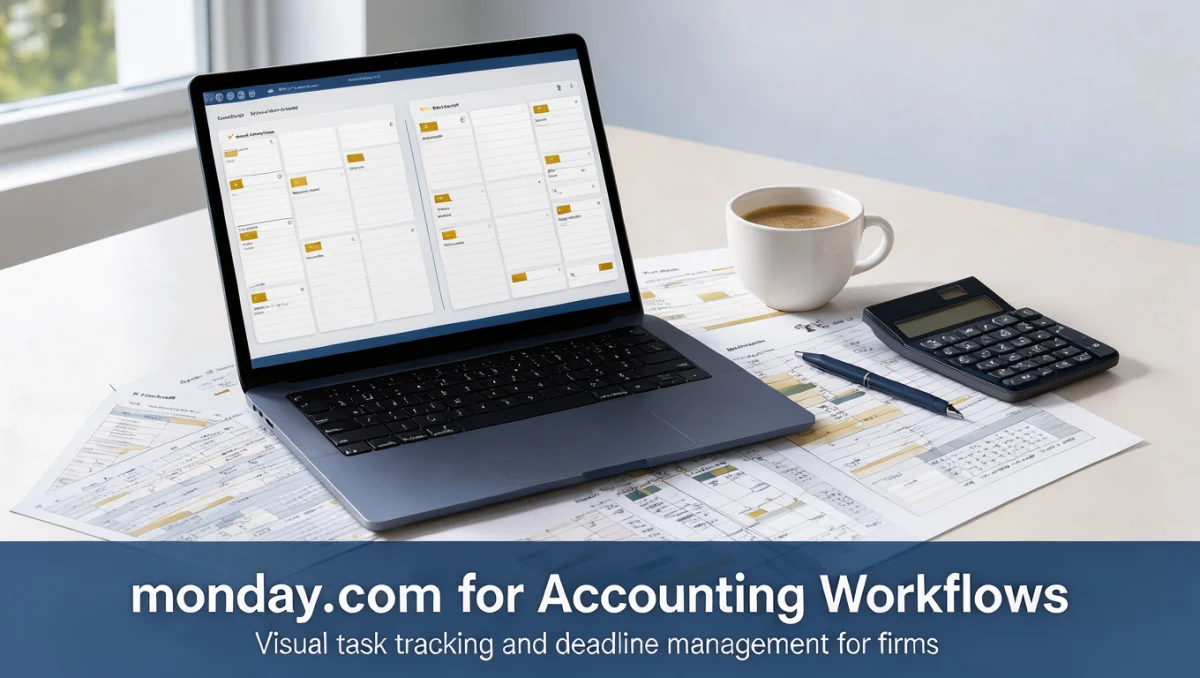
Central to monday.com is its visual tracking via customizable boards, where each row can represent a deliverable like a monthly reconciliation or an annual filing. Columns are used for assignees, due dates, priority, and status. Managers can switch between grid, timeline, calendar, or card views to monitor upcoming deadlines effectively.
Automated Workflow Transitions
Firms can configure rule-based automations, such as updating a status upon document receipt or notifying a manager when a review stage is complete. In high-volume compliance environments, these automations reduce manual oversight. Confirm the available execution allowances based on your subscription level, as automated triggers are often tied to specific plans.
Team Workload and Resource Oversight
Resource management views enable practice leaders to monitor assignments across staff accountants and contractors. Boards can display task allocations against delivery targets, helping supervisors balance workloads and prevent bottlenecks, ensuring client files progress smoothly through review stages during peak periods.
Client Request and Intake Tracking
Accounting firms often face delays waiting for essential documents from clients. By establishing standardized intake boards, teams can track outstanding client requests in real time. Items automatically move from document gathering to active review once files are submitted, creating clear operational accountability across the firm.
User Experience and Initial Setup

monday.com features an intuitive interface with drag-and-drop functionality, clear visual labels, and color-coded status tags. New team members typically find existing boards easy to navigate due to clear indications of item ownership and current states. Basic daily use requires minimal training once boards are properly configured.
The primary learning investment lies in the initial architectural setup rather than routine data entry. As an adaptable framework, practice administrators must decide on the structure of client boards, archiving methods for completed work, and team permission settings. Establishing clear organizational conventions early on is key to preventing board clutter as the client roster grows.
Advantages and Disadvantages for Accounting Firms
Evaluating any operational platform involves weighing its customization potential against ongoing administrative effort. Accounting practices should consider both the structural strengths and practical limitations of monday.com.
Operational Strengths
- Flexible Board Structures: Allows firms to design custom client tracking columns without needing technical coding expertise.
- Multiple View Styles: Managers can easily switch between calendar views for deadlines and grid views for detailed task lists.
- Visual Status Indicators: Provide instant clarity on review stages and pending approvals for team members.
- Standardized Project Boards: Can be duplicated for new clients, ensuring consistent service standards and onboarding processes.
Practical Limitations and Solutions
- No Native General Ledger: Firms must maintain their primary financial records in separate accounting software.
- Initial Setup Effort: Requires deliberate design work; busy practices can mitigate this by establishing uniform board conventions before onboarding staff.
- Advanced Workflow Governance: Requires careful review of subscription plans to ensure chosen account types meet firm security and policy requirements.
Comparing monday.com with Alternatives
Understanding how monday.com stacks up against other solutions helps firms pinpoint the right software category for their administrative needs. Different work management tools offer distinct approaches.
Asana excels at structured task management and team coordination, particularly for general corporate functions. It offers clear workflow dependencies for teams that prefer list-based task progression over extensive column customization. Teams choosing between these should compare board adaptability with task hierarchy preferences.
ClickUp aims for comprehensive productivity, integrating task management, document editing, and goal tracking. Its extensive feature set offers considerable flexibility, though some teams may find the administrative setup more demanding when configuring firm-wide standards.
Specialized accounting practice management platforms are strictly focused on tax preparation, firm billing, and client document exchange. While these offer immediate pre-built tax workflows, flexible platforms like monday.com provide superior customization for non-standard advisory services and modern, cross-departmental operations.
Who Benefits Most from monday.com?

The software is well-suited for organizations with specific structural preferences and operational profiles. Reviewing typical workplace roles can clarify if it aligns with your firm's structure.
Small to Mid-Sized Accounting Firms
Practices with multiple staff members handling recurring bookkeeping, payroll, and corporate filings benefit from transparent workload distribution. Supervisors gain oversight of active deliverables without frequent status checks on individual staff.
Modern Advisory and Consulting Teams
Firms that blend accounting compliance with strategic advisory services require platforms capable of managing custom project scopes. Teams operating within the broader Collaboration & Productivity space will find customizable boards adapt well to unique consulting engagements that don't fit rigid tax templates.
Solo Practitioners and Micro-Bookkeepers
Independent operators managing a smaller client base might find the setup of custom workflow boards more involved than necessary. Bookkeepers who rely primarily on basic calendar alerts or native features in their general ledger software should assess if dedicated project boards add sufficient administrative value.
Choosing the Right Plan for Your Team
Selecting an appropriate plan involves aligning user needs with organizational policies. Buyers should review specific account parameters directly with the vendor before purchase.
| What to check | Why it matters |
|---|---|
| User seat minimums | Subscription tiers may have user increments affecting total monthly billing. |
| Automation allowances | Monthly execution limits dictate how many status triggers and alerts can run. |
| Administrative permissions | Role-based access controls determine who can edit client board structures. |
| Data storage policies | File attachment rules affect teams uploading client records and workpapers. |
| Client viewing options | Permissions for external guests determine if clients can view board progress. |
Frequently Asked Questions
Preparing for Board Setup
Outline your standard client workflows on paper before creating digital boards. Defining preparation, review, and filing steps ensures board columns remain uniform and understandable across the organization.
Anticipating Expenses Beyond Base Software
Budget for initial administrative setup time, staff orientation, and potential third-party connector costs. Consulting with firm partners about process standardization can help avoid unexpected configuration delays.
Consulting External Specialists
Seeking advice from an operational specialist or experienced practice manager can streamline workspace architecture. Professional guidance assists teams in establishing secure document handling and standardized client naming conventions from the outset.
Controlling Work Management Costs
Practice leaders can manage software expenses by regularly reviewing active user accounts and deactivating unnecessary guest seats. Verifying automation usage on official account dashboards prevents unexpected subscription upgrades.
Final Assessment of monday.com for Accountants
monday.com provides accounting practices with an adaptable work management environment that clarifies internal task handoffs, deadline tracking, and operational workloads. While it requires initial template setup to align with professional accounting cycles, its inherent flexibility makes it a compelling operational engine for collaborative firms.
| Criterion | Score /10 | Reason |
|---|---|---|
| Features | 8.5/10 | Flexible columns, multiple views, and customizable boards support diverse client needs. |
| Ease of Use | 8.0/10 | Visual layouts and color-coded statuses make daily task tracking accessible. |
| Pricing and Value | 7.2/10 | Verify minimum seat rules and automation limits for predictable costs. |
| Integrations | 7.5/10 | Review connection capabilities with external ledger and storage systems. |
| Audience Fit | 8.2/10 | Well-suited for collaborative teams needing structured task oversight. |
| Support | 7.0/10 | Check available assistance channels and documentation on the vendor portal. |
| Competitive Position | 7.8/10 | Offers superior board customization compared to rigid task apps, but requires template setup. |
| Overall score | 7.7/10 | Strong visual work management for collaborative accounting teams balancing multi-client deadlines. |
Firms with multiple team members, recurring compliance milestones, and advisory projects will find significant organizational value. Conversely, solo bookkeepers with simpler workflows should confirm whether dedicated project boards align with their operational scale before committing.
Have questions about selecting operational software for your team? Reach out to the Best Software Reviews team via our contact page or connect with us on LinkedIn for ongoing software evaluation guidance.
See More monday com for accountants