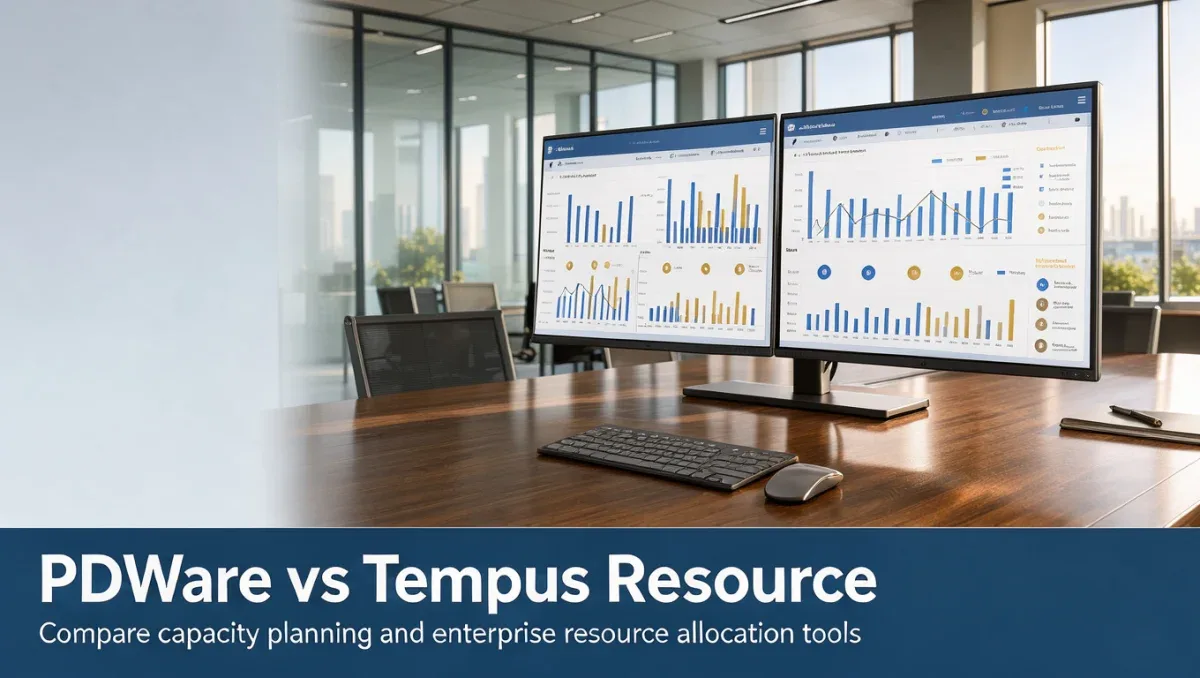
Selecting the right resource planning and capacity management platform is crucial in today's evolving project environments. This analysis focuses on PDWare vs Tempus Resource, two leading solutions designed to help organizations balance project demands with workforce availability. We'll explore their core functionalities, target users, and how they address operational bottlenecks, providing clarity for your software choice.
Both platforms aim to resolve staffing issues, model future project needs, and align resource deployment with company objectives. The optimal choice often hinges on whether your organization prioritizes detailed project oversight or robust scenario simulation within modern Office Software ecosystems.
In brief: Opt for PDWare if structured resource management and traditional portfolio planning are paramount. Choose Tempus Resource for its advanced dynamic simulation and real-time modeling capabilities. Our evaluation gives PDWare an 8.0/10 and Tempus Resource an 8.2/10.
| Comparison Aspect | PDWare | Tempus Resource |
|---|---|---|
| Overall Score | 8.0/10 | 8.2/10 |
| Ideal For | Operational scheduling & structured tracking | Scenario planning & dynamic simulations |
| Primary Function | Resource governance & execution management | Predictive forecasting & impact modeling |
| Key Consideration | Clear visibility of staff allocation across projects | Frequent evaluation of project proposals before commitment |
Understanding the Core Differences

PDWare excels in providing systematic tracking of human resources across active projects and ongoing operational tasks. It emphasizes portfolio governance, enabling PMOs to ensure accountability, record actual allocations, and prevent overcommitment of teams.
Conversely, Tempus Resource, developed by ProSymmetry, centers on predictive modeling, comprehensive capacity planning, and portfolio simulation. It is engineered for decision-makers who need to rigorously assess potential projects against current workforce capacity to gauge risk and viability before committing funds.
Aligning Software with Your Needs
The decision between PDWare and Tempus Resource depends on how your planning teams manage the trade-offs between immediate task allocation and long-term strategic simulation. Consider the following scenarios to guide your selection:
| Organizational Scenario | PDWare is Suitable If | Tempus Resource is Suitable If |
|---|---|---|
| Managing unexpected project demands | You need to gauge the impact of changes on existing operational schedules. | You require side-by-side models to compare potential outcomes. |
| Balancing project work and operations | Managers need to track administrative time alongside project duties. | Teams separate baseline support activities before modeling new initiatives. |
| Enhancing PMO oversight | Standardized project entry and structured allocation approvals are essential. | Strategic portfolio alignment and identifying resource bottlenecks are priorities. |
| Handling role substitutions | Direct skill and role matching within schedules is required. | Simulations are needed to show how substitutions affect delivery timelines. |
| Supporting organizational growth | Departments operate with predictable workflows. | The portfolio requires frequent replanning due to rapid changes. |
Evaluating Functionality and Usability
Features Deep Dive
Assess how each platform handles capacity forecasts and resource requests. Test the system by uploading sample project timelines and department rosters to see how it identifies deficits, over-allocation, and potential delays.
Ease of Use Assessment
Evaluate the learning curve for project leads and resource managers. Have team members input monthly estimates to determine the ease of updating forecasts during regular planning cycles.
Pricing and Value Considerations
Discuss licensing structures directly with vendor representatives. Clarify costs based on user count, administrative roles, or portfolio size, and verify if annual agreements include implementation support.
Integration Capabilities
Verify data exchange protocols with your existing project management, ERP, and financial systems. Confirm whether synchronization relies on built-in connectors or necessitates custom development.
Audience Fit and Stakeholder Alignment
Determine which platform best serves your primary stakeholders. Is the focus on executive-level scenario visualization or on detailed weekly scheduling for resource managers?
Support and Onboarding
Inquire about available onboarding programs, technical support channels, and account management services to ensure smooth initial setup and ongoing assistance.
Competitive Positioning in the Market
Consider how well each platform aligns with your long-term portfolio governance goals compared to broader project portfolio management suites.
Cost Transparency Checklist
Resource management platforms vary widely in their pricing models. Use this checklist when discussing costs with vendors to ensure full transparency:
| Cost Component | Questions for PDWare | Questions for Tempus Resource |
|---|---|---|
| User Tier Licensing | Are read-only users counted in paid seats? | How are administrative and planning roles priced? |
| Implementation Fees | Are formal onboarding packages mandatory for deployment? | Do initial model setup and configuration incur consulting fees? |
| Connector Maintenance | Do third-party integration modules have separate costs? | Do data import utilities require specific add-on licenses? |
| Training Sessions | What is the scope of initial administrator and user training? | Do ongoing simulation workshops require separate fees? |
Making the Final Decision
Choosing between PDWare and Tempus Resource involves a structured internal review. Follow these steps for a clear organizational decision:
- Map Your Workflow: Identify whether daily allocation management or future portfolio simulation is your main bottleneck.
- Prepare Data: Compile representative project and staffing data for realistic vendor evaluations.
- Request Targeted Demos: Ask for demonstrations focused on your specific planning challenges, not generic overviews.
- Calculate Total Cost of Ownership: Factor in implementation, licenses, and administrative overhead over three years.
Frequently Asked Questions
Matrix Organization Compatibility
Both platforms support matrix environments. Test role-based borrowing and approval workflows during trials to confirm compatibility with your company's governance structure.
Adoption Preparation
Ensure clean data on staff availability, project timelines, and skill classifications before adoption. Inconsistent baseline data will lead to forecasting errors regardless of the chosen tool.
Integration with Task Systems
Capacity planning tools operate above task tracking systems, focusing on aggregate hours and multi-month schedules. Task tools remain essential for daily team activities.
User Licensing for Growing Companies
Distinguish between full planners, requestors, and executive viewers when determining user needs. Confirm license categorization rules with vendors before finalizing counts.
Concluding Recommendation
Both PDWare and Tempus Resource offer robust solutions for managing resource conflicts and stabilizing delivery pipelines. Your final choice should align with whether your enterprise prioritizes operational tracking or strategic simulation.
Select PDWare for stable operational controls, clear scheduling oversight, and established resource governance. Choose Tempus Resource if your leadership team frequently analyzes evolving project scenarios and requires simulation capabilities to safeguard organizational capacity. Learn more about similar solutions within the Best Software Reviews resource center.